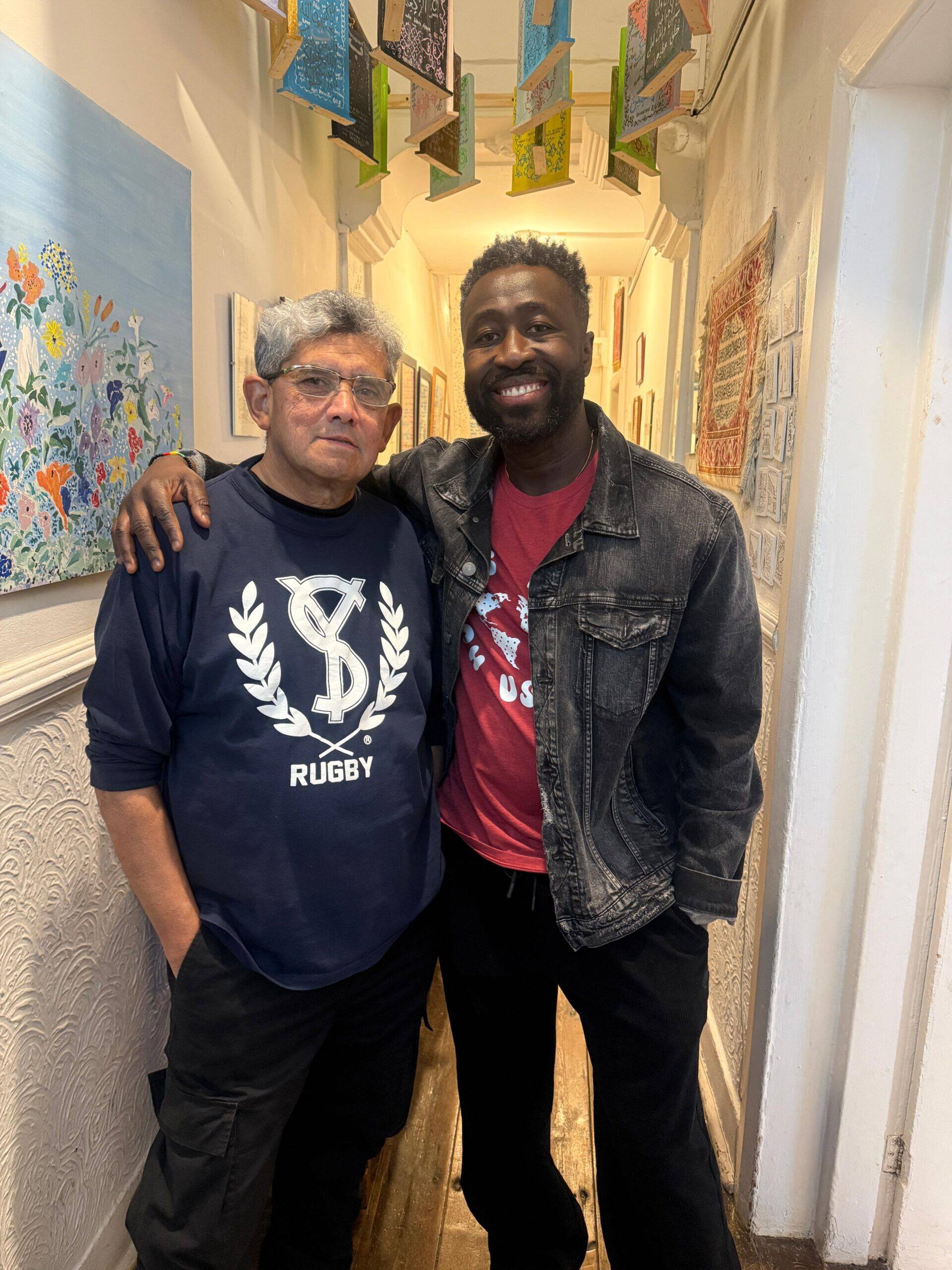
During my visit to South Africa, my friend Yaseen and his wife arranged for me to meet Professor Mogamat Faadiel Arnold in Bo-Kaap, Cape Town. They believed his work and philosophy would resonate with me.
They were right.
Bo-Kaap is one of those places that immediately draws your eyes. Its brightly colored homes climb the slopes above Cape Town, creating the view many people recognize from photographs. Yet the longer you spend there, the more you realize that the colors are only the surface of its story.
Bo-Kaap is a community shaped by generations of faith, family, craftsmanship, resistance, and belonging. Its history lives not only in its architecture but also in the relationships between the people who call it home. The houses stand close to one another, but so do the stories.
There is a sense that life extends beyond the walls of any single home. The streets, doorways, places of worship, kitchens, and gathering spaces all contribute to the identity of the community. Knowledge is carried through families. Traditions are preserved through everyday practice. Stories are passed from one generation to another, allowing the past to remain present.
That sense of connection felt familiar to me.

It reminded me of growing up in Ghana, where a home was rarely occupied by one person’s story alone. People gathered, conversations moved easily between generations, and learning often happened without being announced as learning. Someone told a story. Someone else added a proverb. An elder offered a different perspective. Meaning emerged through the exchange.
Bo-Kaap carries its own distinct history and identity, but I recognized something within its communal spirit: the understanding that who we are cannot be separated from the people, places, and stories that have shaped us. Perhaps that is why meeting Faadiel there felt so significant.
He welcomed us into the home where he was born, a house he described as approximately 300 years old. Inside, the wider story of Bo-Kaap became personal. History was not displayed behind glass. It remained part of the life of the house.
Faadiel showed us timber recovered during renovations and reused within the home. He spoke about fragments of crockery discovered beneath the floor, a tea set that belonged to his grandfather, and the art that has moved through generations of his family. He is an artist. His late daughter was also an artist, and now his granddaughter is beginning to create her own work.
The house felt less like a structure and more like a living archive. It carried the same sense of continuity I felt in Bo-Kaap itself; the idea that a place can hold the memories, work, faith, and creativity of those who came before while continuing to make room for those who come next. What stayed with me most, however, was not an artifact or architectural feature. It was what happened when we sat together and began to talk.
The house became a place of gathering. And slowly, almost without us noticing, it became a classroom.
Inside Faadiel’s Home
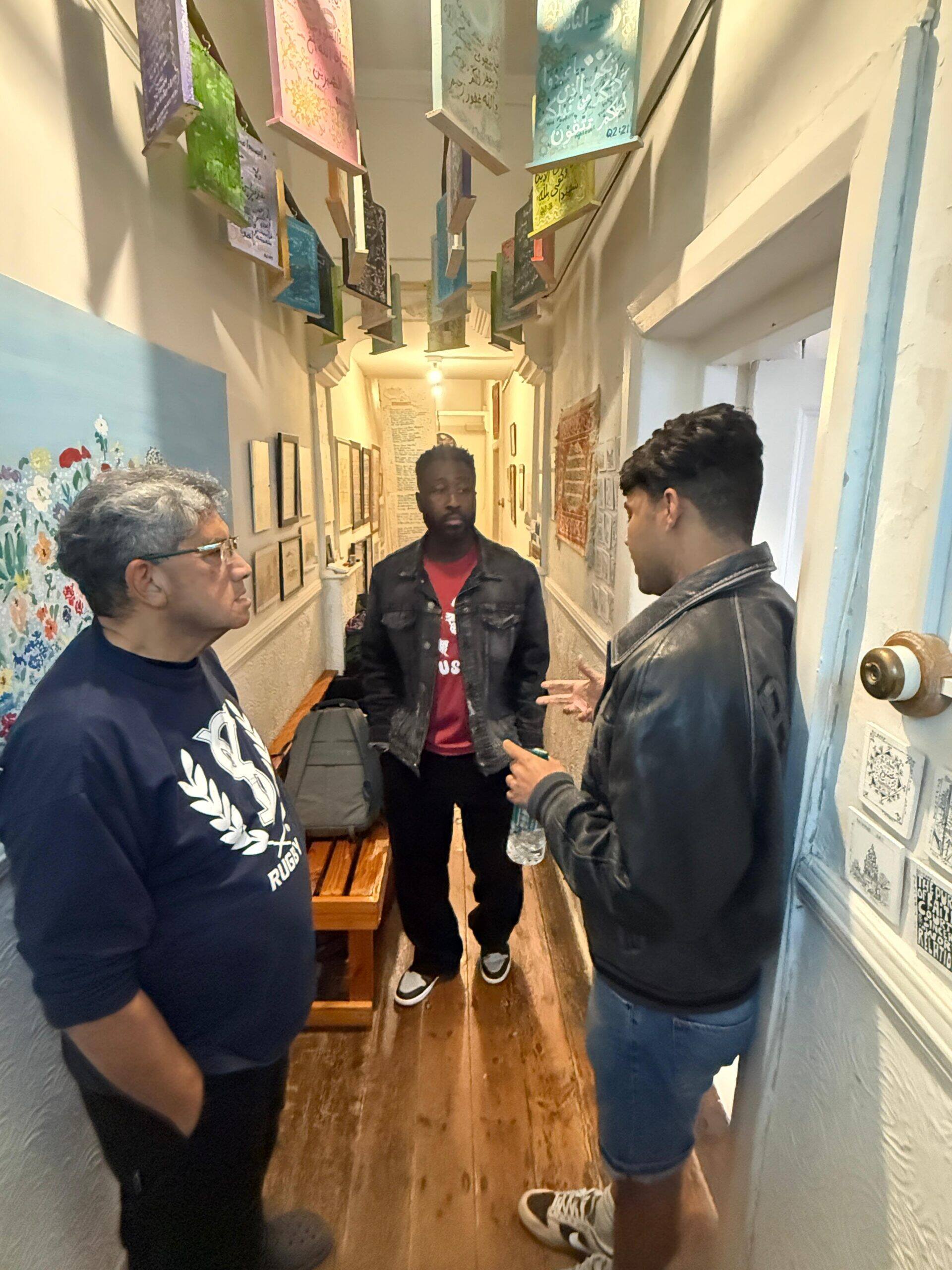
Faadiel is an educator, artist, author, and community advocate whose life and work are deeply rooted in Bo-Kaap. He leads ICRA-HLL University, also known as the Icra Comprehensive School, where he has developed an educational philosophy called Holistic Leisure Learning.
His approach is grounded in his Islamic faith and integrates multiple subjects within a Qur’an- and Sunnah-centered curriculum. Rather than placing traditional examinations, ranking, and competition at the center of education, his philosophy emphasizes self-mastery, practical application, collaboration, and the interconnectedness of knowledge.
As he explained his ideas, our conversation moved freely between education, faith, art, community, psychology, science, systems thinking, and the purpose of learning. There was no presentation and no predetermined destination. Faadiel would introduce an idea. Yaseen would build upon it or offer another connection. Nazeema would share her perspective, and I would relate the conversation to my own experiences. A question led to a story, and one person’s reflection opened another line of thought. None of us was simply receiving information. We were listening, questioning, connecting, and making meaning together. Learning emerged through our engagement with one another.
The house had become a classroom. Not because Faadiel stood before us and delivered a lesson, but because he created the conditions in which learning could emerge.
A house is a place of gathering. At its best, it allows people to arrive, sit together, share what they carry, and experience a sense of belonging. Perhaps where people gather to learn, be in classroom or meeting rooms/spaces at work can be created in the same way. It can be any place where people trust one another enough to bring forward their experiences, uncertainties, questions, and different ways of seeing. In that sense, the space is not created by the walls around us. It is created by the relationships between us.
At one point, Faadiel said something that stayed with me: “There is a difference between education and learning.” Those words reached me because of what I was experiencing inside his home. There was room to question, follow an idea, and admit that I did not know something. No one was trying to push us toward one correct answer. Each person’s experience had a place in the conversation, and each of us belonged within the learning.
The freedom I felt in that moment that carried me back to the classrooms of my childhood in Ghana, where learning had often felt very different.
What Examinations Came to Mean for Me
It is difficult for me to return to these memories. Even writing about them brings an emotional and physical response because what happened in those classrooms shaped more than how I performed in school. It shaped my relationship with being wrong. For much of my life, I have carried a deep fear of traditional examinations, particularly multiple-choice tests.
Growing up in Ghana, a poor examination result rarely ended when the paper was returned. More often than not, it was followed by a beating at school and again at home.
This was one of the most painful experiences of my childhood. I still feel my body tense as I write those words.
Education was taken seriously in the world in which I grew up. It represented discipline, opportunity, family pride, and the possibility of a better future. Examinations provided structure and a way to measure whether students were progressing.
The adults around me may have believed that strictness and punishment would motivate me, correct me, and prepare me for a world in which success mattered. They were working from their own understanding of what education required and what would help a child succeed.
I can now make room for that intention while also being honest about how I experienced it. The intended lesson may have been discipline, effort, or responsibility. But inside me, another kind of learning was taking place.
I learned that being wrong could bring pain. I learned to hide uncertainty. I learned to study the person asking the question as carefully as I studied the question itself. I learned that appearing to know could feel safer than admitting that I did not understand. Most of all, I learned to search for the safest answer.
Every examination therefore measured more than what I knew. Each question carried the possibility of what might happen if I failed. A wrong answer was no longer simply a wrong answer. It had become a threat. My body learned that lesson long before I had the language to explain it. It learned to tighten, anticipate pain, and understand that being wrong was not safe.
Even now, as an adult, I can sit for an examination and feel that fear return. No one is waiting to beat me, but my body does not always recognize the difference. The examination in front of me may have changed, but I still encounter it through the history I carry.
This does not mean that my education in Ghana gave me nothing of value. It gave me knowledge, discipline, opportunity, and a deep respect for education. It helped shape the person I became. But it also shaped my relationship with learning in ways no one may have intended.
That was why Faadiel’s distinction between education and learning stayed with me.
He spoke about traditional examinations as a form of control; not necessarily because all examinations are harmful, but because they can determine what knowledge matters, how understanding must be demonstrated, and which answers are acceptable.
I recognize that examinations can serve important purposes. They can provide structure, establish standards, and help assess knowledge or competence. The question is whether an examination remains a tool within learning or gradually becomes the purpose of it.
For me, fear complicated that distinction. I was not always trying to understand the subject. I was trying to avoid the consequences of being wrong. What appeared from the outside as an assessment of knowledge often felt inside me like an exercise in self-protection.
What I experienced in Faadiel’s home offered a profound contrast.
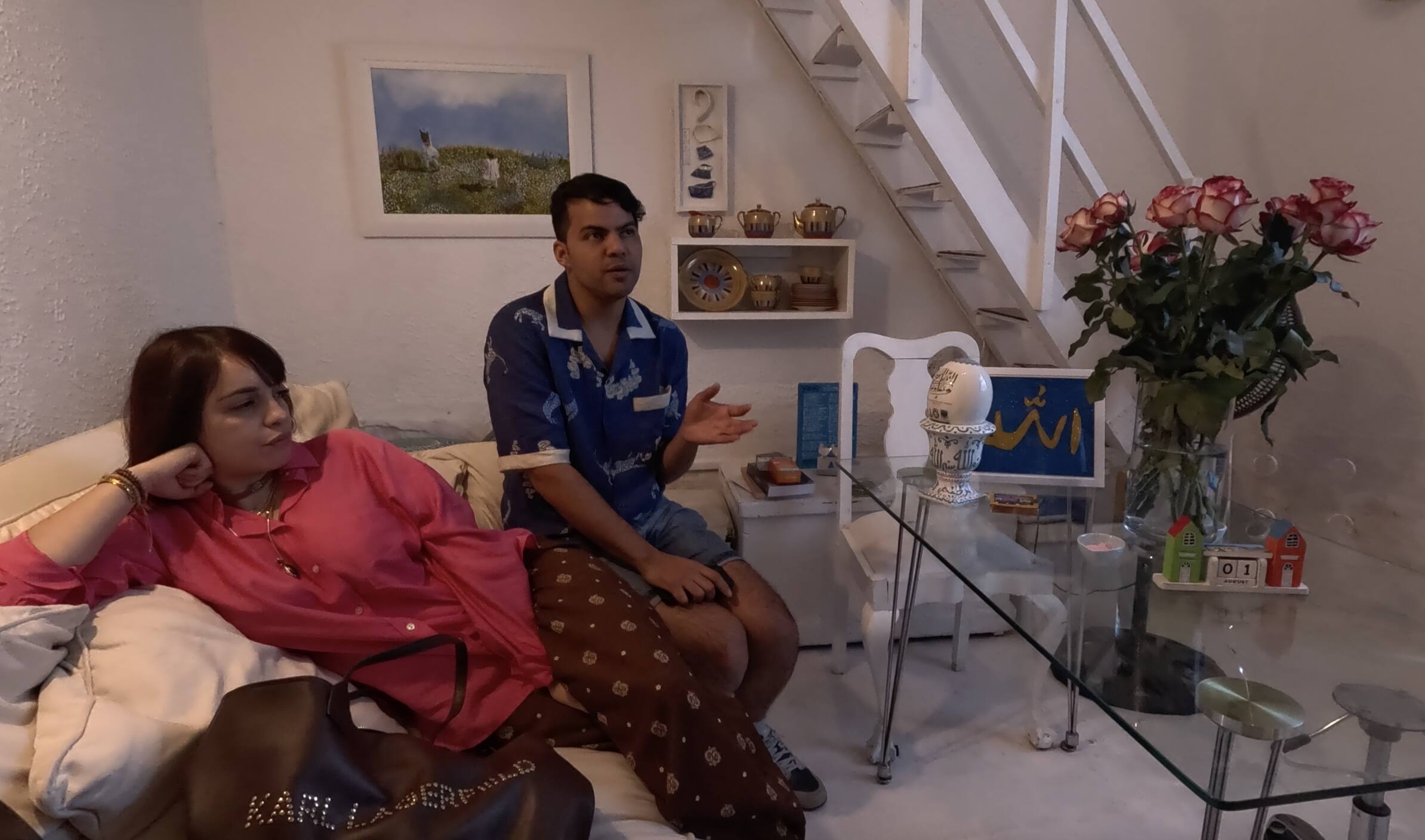
There was no examination waiting for us at the end. There was no single answer we were expected to reach and no fear of getting something wrong. There was conversation.
Faadiel introduced an idea. Yaseen built upon it. His wife, Nazeema, offered another perspective, and I connected what I was hearing to my own experiences. Each of us was free to question, explore, and contribute.
We all belonged within the conversation, and our perspectives were valued. Our experiences were not treated as distractions from the learning; they became part of it. We listened to one another, made connections, and came to understand something that none of us could have reached alone.
As a child, I often searched for the answer someone else had already decided was correct. In Faadiel’s home, we explored what we might come to understand together. The conversation still had direction. Faadiel brought his knowledge, his questions, his Islamic faith, and his deep understanding of the Qur’an into the room. But he did not use what he knew to close the conversation. He used it to open one.
We were not asked to reproduce his understanding. We were invited to bring our own experiences into conversation with it. That was the difference I felt. Learning was not something Faadiel delivered while the rest of us simply received it. It emerged through our engagement with one another.
For once, I was not searching for the safest answer. I was part of creating the learning. Maybe I was never afraid of learning. Perhaps I was afraid of what had once been attached to it.

More to the Story
A Humans Among Us Store.
Through photography, storytelling, and thoughtfully designed collections, we invite you to slow down, stay curious, and discover the stories that connect us.
Creating Space for Learning to Emerge
As someone interested in organizational learning and the learning sciences, I could not leave Faadiel’s home without thinking about what the experience might offer organizations.
Organizations often treat learning as something to be delivered through training, procedures, meetings, reports, and instructions. These structures matter. They provide direction, preserve knowledge, and help people coordinate their work. But providing information is not the same as creating understanding.
People need opportunities to connect what they are being told to what they actually experience. They need to be able to question assumptions, share what they notice, and explore differences between how work is planned and how it unfolds.
This is especially important when learning from everyday work. The people closest to the work carry knowledge about the conditions they face, the pressures they manage, and the adjustments that keep the organization functioning. Much of that knowledge remains invisible because it does not always fit neatly into a report, procedure, or performance measure.
Bringing people together does not automatically make that knowledge visible. The quality of the relationships matters. People must believe that their experience will be treated as a source of knowledge, that their questions will not be mistaken for resistance, and that admitting uncertainty will not diminish how they are seen.
Dialogue is not the absence of structure. It is a different use of structure. Rather than controlling every outcome, structure can provide enough direction for people to examine their work, listen across roles, and develop a fuller understanding together.
I think that was what our time with Faadiel revealed. He offered direction without deciding what each of us had to take away. He shared what he knew while remaining open to what others brought with them.
Perhaps organizations can do the same.
Leaders do not always have to enter a room with the answer or decide in advance where every discussion must lead. Sometimes their most important responsibility is to make it possible for people to speak honestly, think together, and remain curious about what they do not yet understand.
Faadiel’s house became a classroom because he created room for discovery. Organizations begin to learn when their people are given that same opportunity.
What I Carried With Me
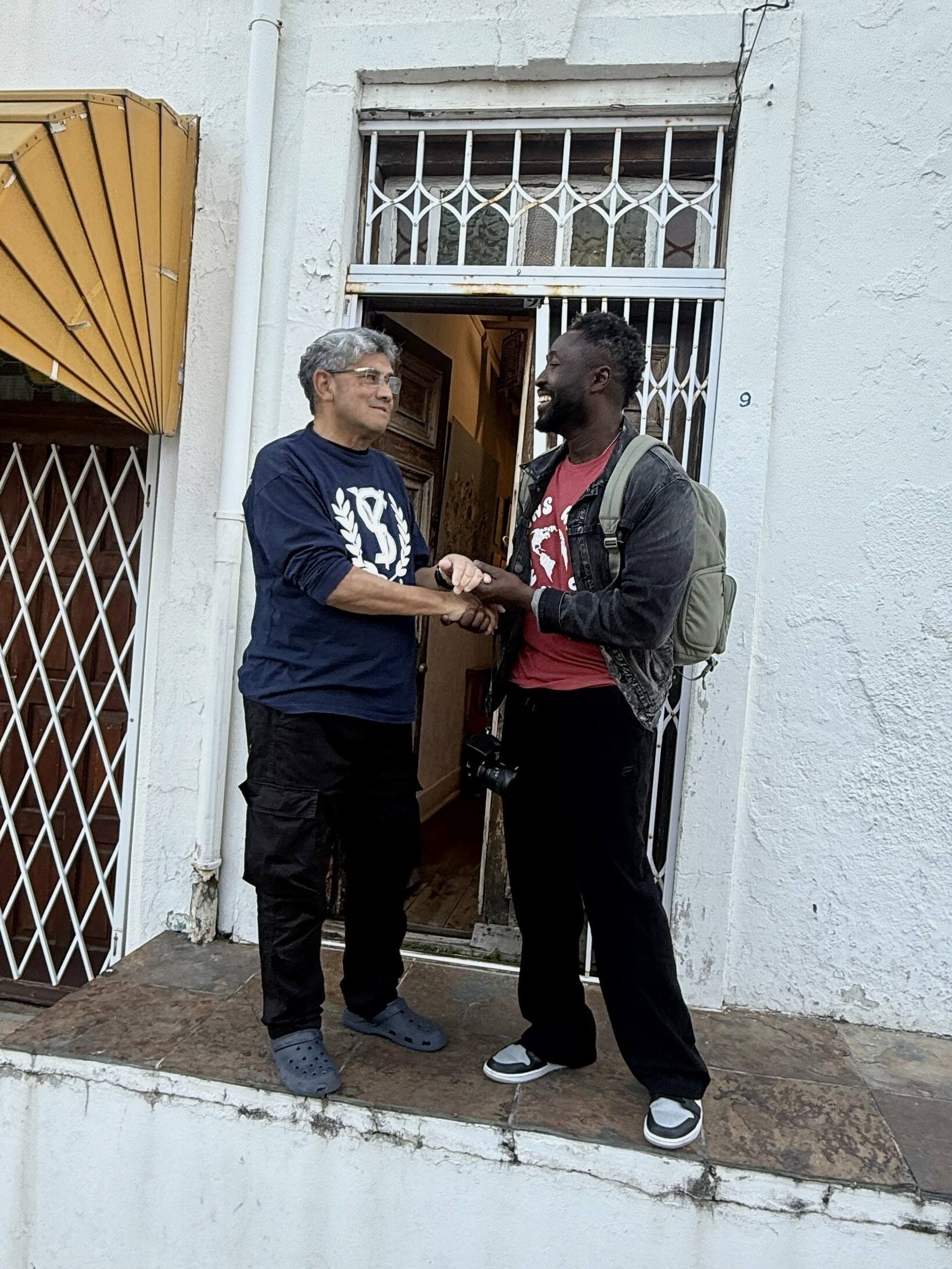
As we walked out of his home, Faadiel introduced me to one final word: fitrah.
As he explained it to me, fitrah describes the natural purity and disposition with which a child enters the world, before life begins adding its fears, pressures, and expectations.
The word came from the Islamic faith that shapes how Faadiel understands education, humanity, and the purpose of learning. Throughout our time together, I could sense the depth of his relationship with the Qur’an; not simply as a text he had studied, but as a source of wisdom through which he understood life.
I do not pretend to understand fitrah with the same depth that he does. Yet the word stayed with me.
Perhaps it was because I had just shared how fear changed my relationship with examinations. Somewhere along the way, learning had become connected to avoiding pain and finding the safest answer. Faadiel’s explanation caused me to think about what existed before that fear; curiosity, openness, imagination, and the natural desire to understand.
It left me with a different question.
What if learning is not always about placing something new inside a person? What if part of it is protecting and drawing out what is already there?
Perhaps that was the final lesson I received in Faadiel’s home. Before we add more information, more expectations, or another measure of performance, we might first ask what already lives within the person before us—and what may become possible when it is allowed to come forward.
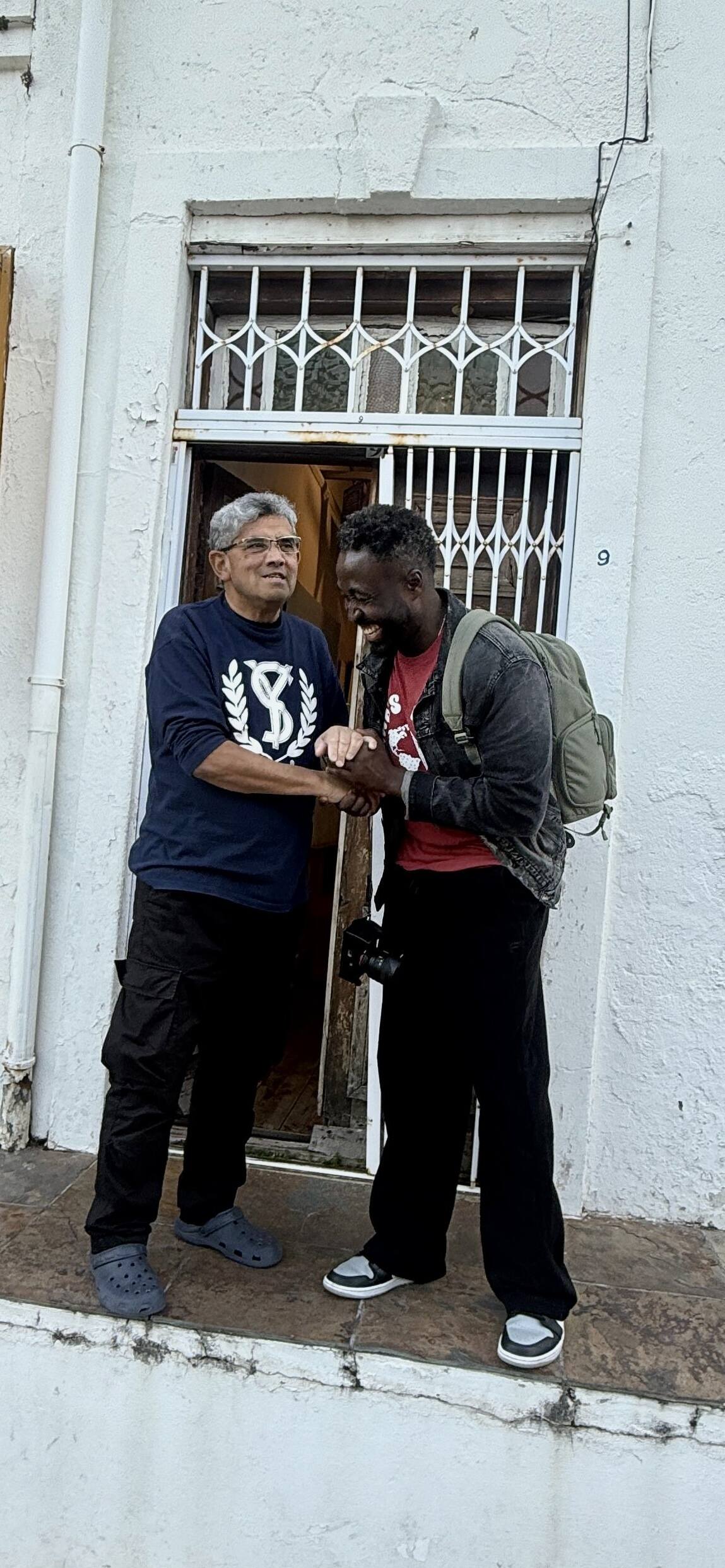
The final photograph captures how I felt as I stood outside Faadiel’s home preparing to leave. What began as an introduction had become a genuine human connection. We came from different places and carried different experiences, yet through curiosity, honest conversation, and a willingness to listen, we found something familiar in each other.
Maybe that is what meaningful learning can do. It does not only leave us knowing more. It brings us closer. It helps us recognize parts of ourselves in another person and reminds us that understanding is often formed between us.
I am deeply grateful to Faadiel for opening his door, sharing his home, and giving us so much of his time. I am equally grateful to Yaseen and Nazeema for recognizing the possibility in this meeting and bringing us together. They gave me an experience that continues to shape how I think about education, safety, relationships, and organizational learning.
The laughter in this photograph expresses something I cannot fully put into words. I arrived at Faadiel’s home as a visitor, but I did not feel like a stranger when I left.
One visit was not enough. There is still so much more to Faadiel’s story and to the community of Bo-Kaap. I look forward to returning, walking through that door again, sitting with him, and listening to more of what the people and the place have to teach me.