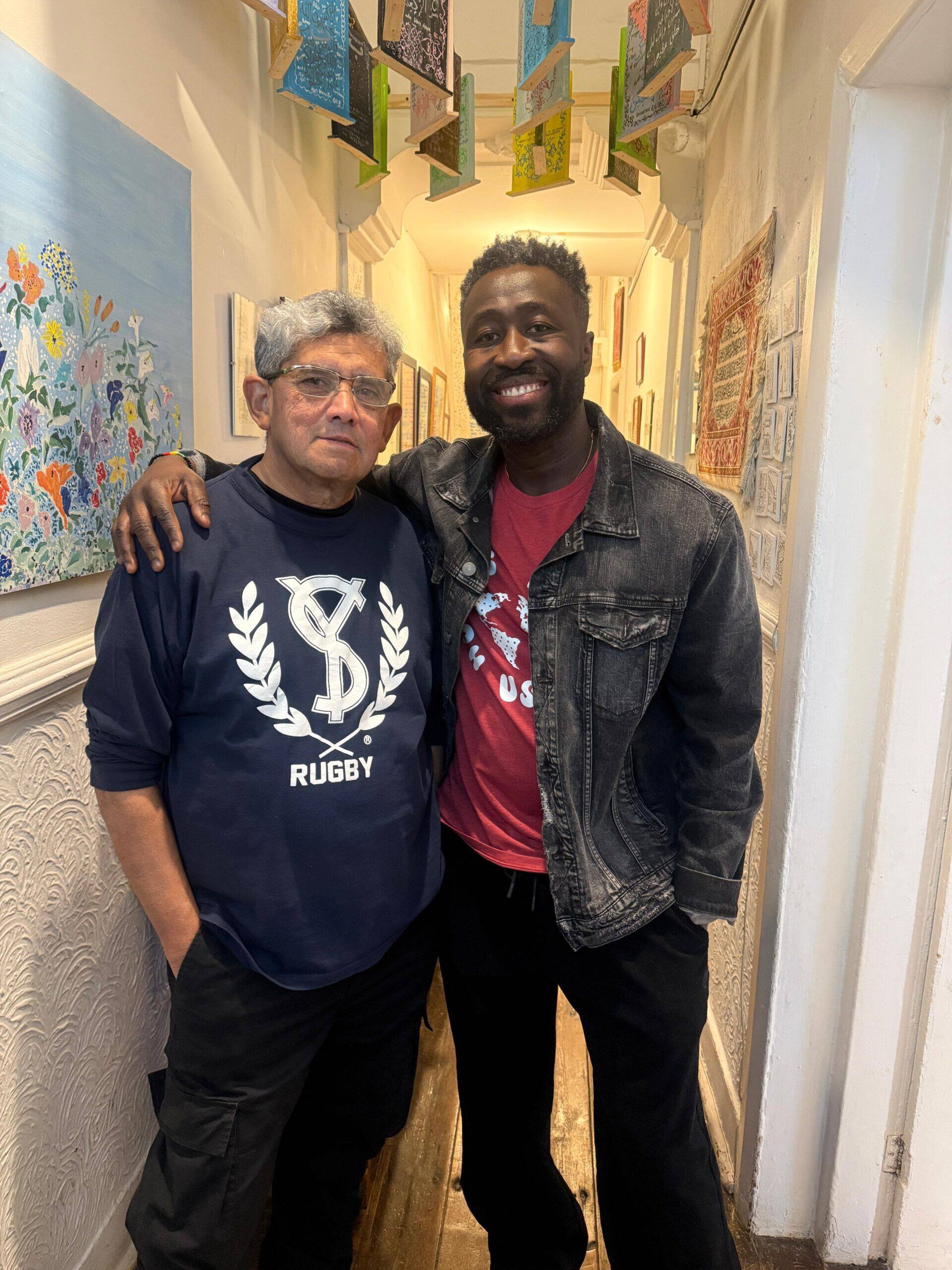
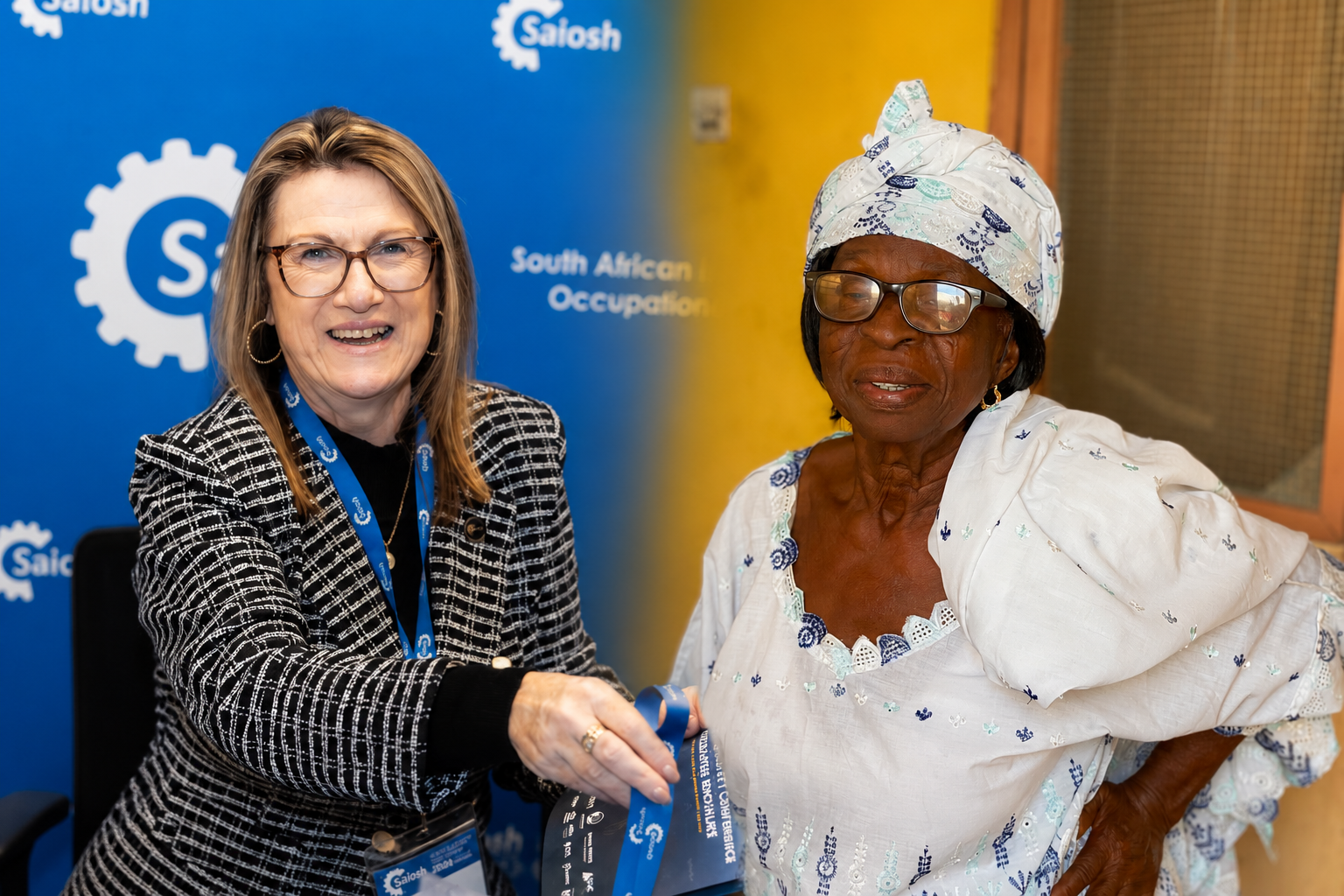
Over the past few weeks, my friend Gareth Nortje and I have been exchanging voice notes on WhatsApp. I met Gareth through the SAIOSH family during my time in South Africa, and these conversations have given us an opportunity to know each other beyond the brief moments we shared while I was there. We have talked about life, family, the experiences that shaped us, and the things we continue to carry.
In one of those conversations, Gareth began talking about his mother, Gillian Nortjé . He called her a saint, and as he continued, I could hear just how much that word meant to him. He spoke with deep appreciation for the sacrifices she had made, the things she had done for him and their family, and the love and care she had given over the years. What stayed with me was not simply what he said about her, but the tenderness with which he said it. I could hear a son who understood, perhaps more deeply now than when he was younger, just how much of herself his mother had given to the people she loved.
Gareth, Gillian, and his father, Neels Nortjé, are among the incredible people whose dedication has helped shape SAIOSH. There is much to appreciate about their work and contributions to safety in South Africa, and across Africa as a whole, but as I listened to Gareth, none of their professional accomplishments was what stayed with me.
What stayed with me was hearing a son talk about his mother.
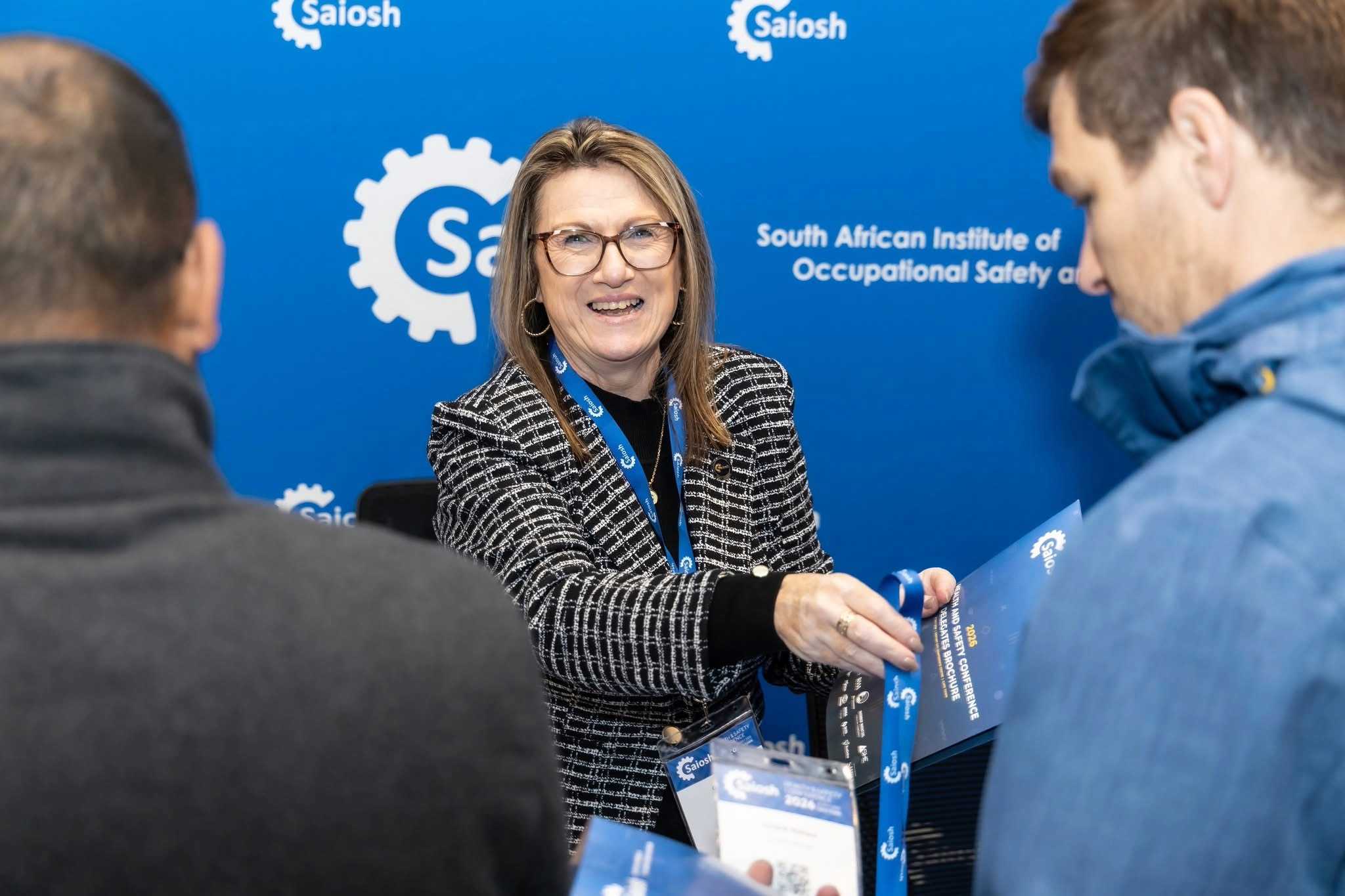
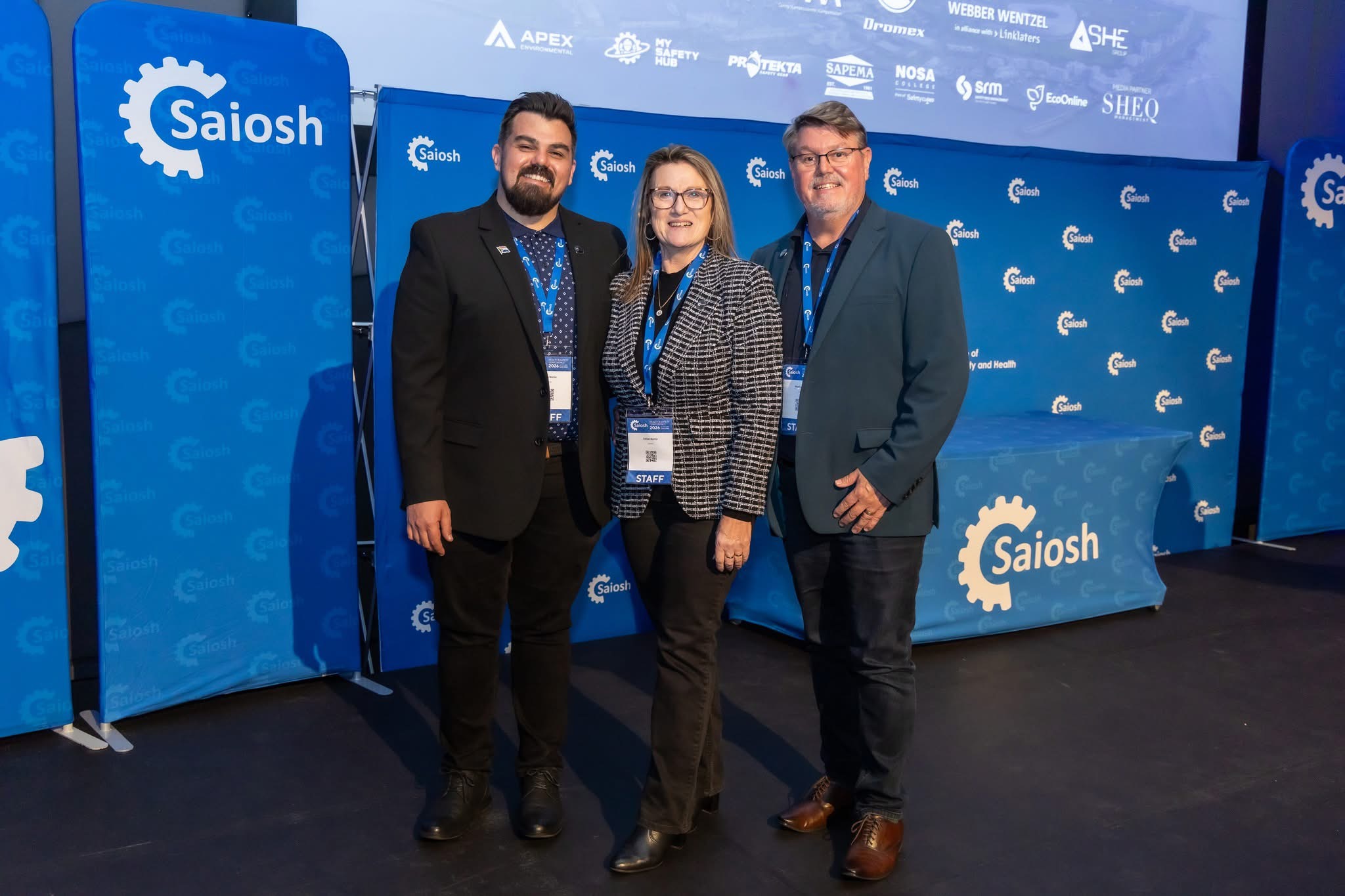
There was something in Gareth’s voice that I immediately recognized. I could hear his love for Gillian without needing an explanation. There was gratitude in the way he described her, but there was tenderness too. It was the kind of appreciation that perhaps deepens as we grow older and begin to understand what our parents were carrying while we were simply busy being their children.
I remember exactly where I was when I heard that part of Gareth’s voice note. I was driving, listening to him talk about his mother, when suddenly I became emotional; tears began to run down my face. It was not because Gareth’s story was sad; it felt like he gave me access to a feeling I have long has but never had access to them. I cried because deep down I knew the feeling he was describing. There was something about the tenderness in his voice that took me somewhere I had not expected to go. For a moment, I was no longer simply driving and listening to a friend talk about his mother; I found myself thinking about my own mother and what it felt like to be in her arms.
I miss that place.
Living thousands of miles away from her has always carried its own kind of longing, but that distance feels different now. In recent years, I have watched as my mother’s memory has begun to slip away. There is a particular ache in loving someone who is still here while realizing that some of the memories you share may no longer be as accessible to them as they are to you.
Perhaps that is why Gareth’s words touched me so deeply. Listening to him love Gillian out loud brought me back, if only for a moment, to the safety of my mother’s arms. I could almost feel what it was like to simply be her baby boy again, before adulthood added all the other identities and responsibilities I now carry. I was not thinking about being a husband, a father, a professional, or any of the other things I have become. I was simply remembering what it felt like to be her little boy.
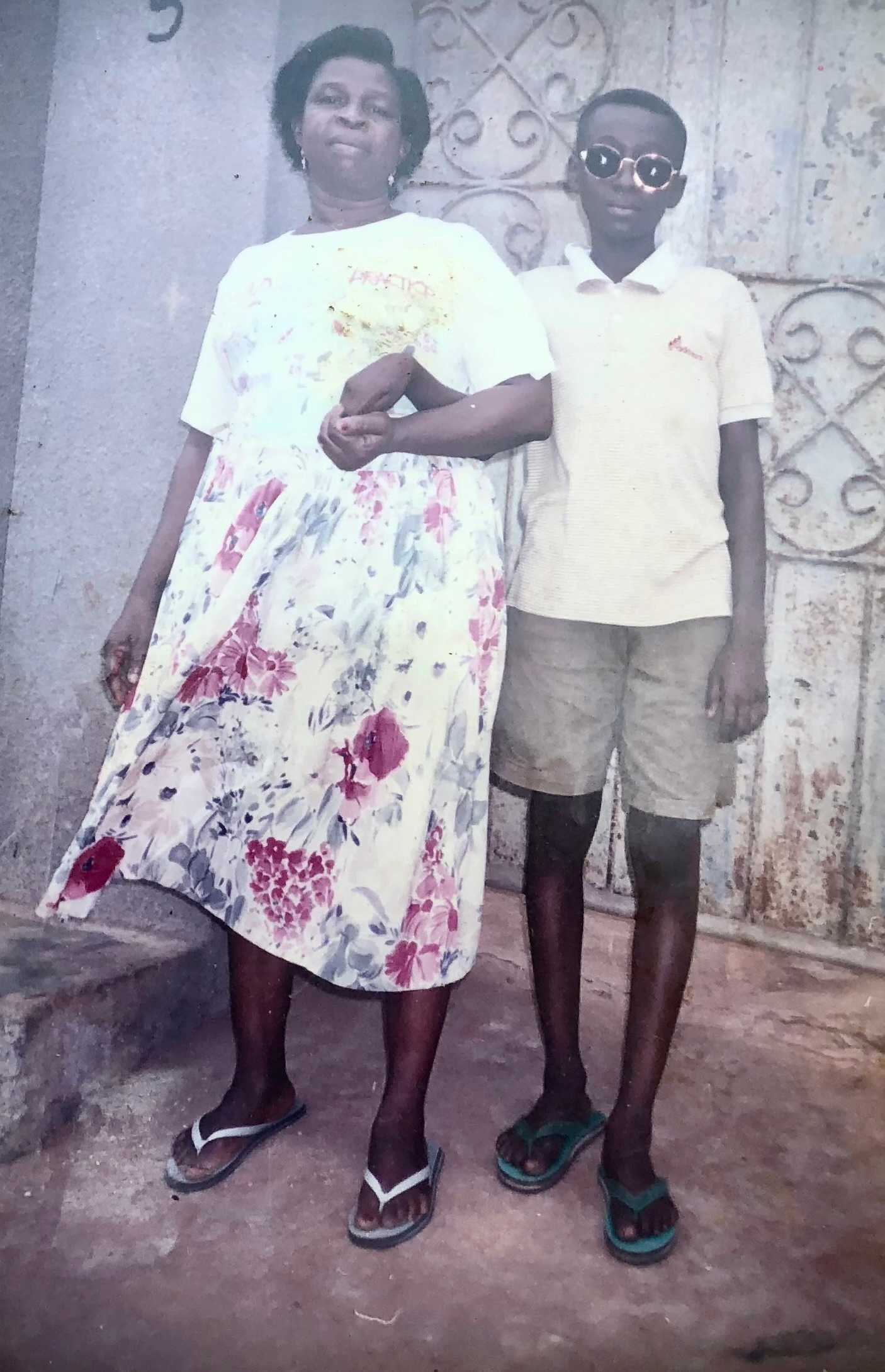
I think that is what opened the tears.
I was not comparing our mothers or thinking about what I would say in my next voice note. I was simply allowing Gareth’s love for Gillian to reach me, and somehow his love gave me access to my own.
Two men from different parts of the world, exchanging voice notes and getting to know each other, had somehow found themselves talking about their mothers. Yet somewhere between Gareth’s words and my tears, I began thinking about something deeper: what our mothers have instilled inside us, how comfortable we are allowing ourselves to feel, and what any of that might have to do with the way we understand strength.
I have returned to that moment several times since; maybe because it reminded me that some memories do not live only in our minds. They live in us. A voice, a story, or the tenderness in another person’s words can suddenly return us to a place we did not realize we were longing to visit.
Gareth was talking about Gillian, but for a few moments, he took me back to my Comfort; my mother. And to understand why that affected me so deeply, I need to introduce you to her.
Comfort
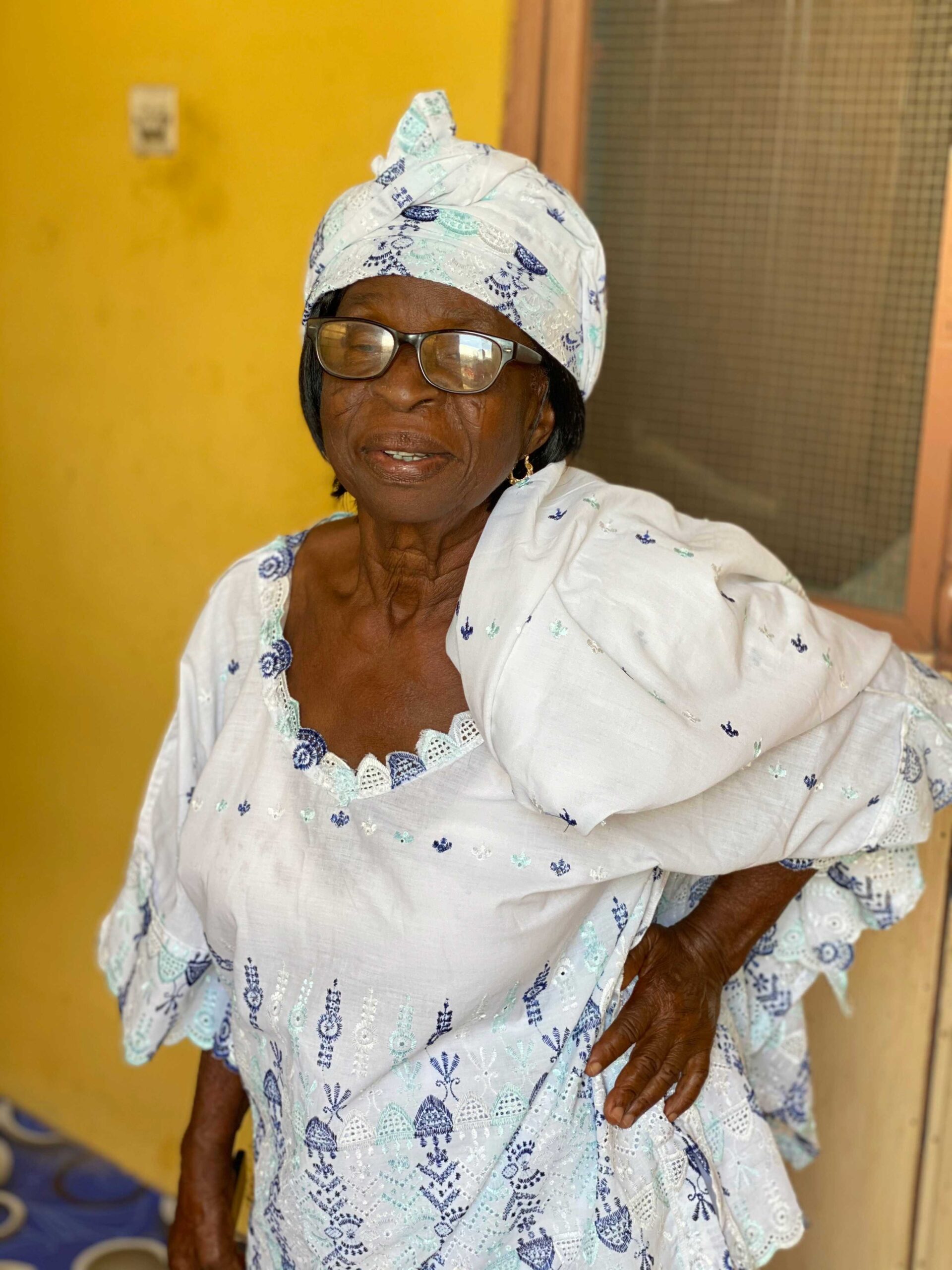
I am the youngest of four children, and I was extremely close to my mother growing up. My siblings, especially my sister, still make fun of me about just how close we were. Apparently, I was still breastfeeding when I was about 2 years old; yes, you read that right; two years old. Unfortunately, the family witnesses seem united against me, so my chances of successfully disputing this story are very low. For years, I treated it as nothing more than an embarrassing family story. As I have gotten older, however, I have started to hear something else inside it: closeness.
I spent a lot of time beside my mother. I watched her, listened to her, talked with her, and experienced much of my early world in her presence. She never sat me down and taught me about empathy, emotional awareness, or human connection. I simply lived close to her. Looking back, I realized some of our deepest learning happens that way, through proximity and relationship. We spend enough time with another human being that something about how they move through the world quietly becomes part of how we move through it too.
I have always felt people’s stories deeply. I have always been curious about what sits beneath what someone first shows me, and I have generally been comfortable with emotion, tenderness, care, vulnerability, and connection. Those qualities existed in me long before I had professional language for any of them.
As I have gotten older, I have wondered how much of that was shaped by the woman I spent so much time beside. Being so close to my mother; Comfort may have allowed me to remain comfortable with parts of myself that, as a man, I might otherwise have learned to suppress.
That realization has given me language for something I have increasingly recognized in myself: feminine energy.
What I Mean by Feminine Energy
I want to spend some time here because the words feminine energy can easily be misunderstood, and it is central to what I am trying to explore.
When I use the term; feminine energy, I am not making a biological argument about women and men. I am not suggesting that women are naturally caring while men are naturally dominant, nor am I arguing that feminine qualities are somehow better than masculine ones. Human beings are far too complex for those categories.
I use feminine energy to describe a set of human capacities that we have often culturally associated with femininity: receptivity, tenderness, intuition, patience, emotional awareness, nurturing, vulnerability, relationship, and care.
For me, it is less about gender and more about a way of being in relationship with ourselves and with others. It is the capacity to receive rather than always impose, to listen without immediately needing to answer, to create space rather than always occupy it, and to nurture rather than only direct. It is the willingness to feel without believing emotion makes us less capable and to remain open enough for another person’s experience to genuinely affect us. These qualities do not belong exclusively to women. They are human capacities.
In the same way, qualities often associated with masculine energy, such as assertiveness, decisiveness, protection, action, firmness, and confrontation, do not belong exclusively to men. We all have access to different expressions of these capacities.
This is why I am not interested in a masculine-versus-feminine argument; rather, I am interested in what happens when one form of energy becomes so dominant that we begin to mistake it for the only legitimate expression of strength.
I am interested in wholeness.
There are times when decisiveness is necessary. There are moments when we need firmness, action, protection, and the courage to confront something directly. There are also moments that ask us to listen, receive, nurture, feel, and make room for another person.
Neither makes us more or less of a man or woman. The question for me is whether we have given ourselves permission to access the full range.
That question has become personal because I recognize a strong connection to the feminine qualities in myself. I feel people’s stories deeply. I am comfortable being affected by another person’s experience. I value relationship, vulnerability, curiosity, tenderness, and care, and I increasingly see these qualities not as something separate from my strength, but as part of it.
When I ask myself where that comfort came from, I keep returning to my mother.
Perhaps growing up so close to Comfort allowed these qualities to remain familiar rather than becoming parts of myself I felt compelled to distance myself from as I became a man. I cannot know that with certainty, and I do not need to turn that possibility into a conclusion. What matters to me is recognizing that the qualities I once might have struggled to name have become central to how I relate to people and how I understand myself.
Gareth gave me another way of thinking about this in his voice notes. With some humor, he described himself as someone who can “cry like a leaking tap.”
I smiled when I heard him say it, partly because by then I had already cried while listening to him talk about Gillian. There was something deeply human about that realization. Here were two men, thousands of miles apart, talking about their mothers and allowing themselves to be moved by what those relationships meant to them.
Perhaps that is what I find most meaningful about crying. The tears themselves are not the point. What matters is what becomes accessible when we stop trying to manage the emotion, explain it away, or shut it down.
I think back to myself driving and listening to Gareth’s voice note. When the tears came, I was not analyzing why I missed my mother or trying to make sense of what her memory loss has meant for me. For those few moments, I was simply feeling it. I missed her. I missed her arms. I missed being her little boy. The emotion reached somewhere that words and analysis could not.
There is something deeply human about allowing ourselves to be affected. When we do not immediately protect ourselves from emotion, we sometimes gain access to parts of ourselves that can become buried beneath all the roles we learn to carry.
Gareth then said something else that, for me, captured the heart of this entire reflection: “I’ll be a man, a protector, a leader, but also I will be emotionally open and connected.”
I keep returning to one word in that statement: also.
It is such a small word, yet it carries so much of what I have been trying to understand about feminine energy and the way we define strength.
Gareth was not suggesting that he needed to become less of a man to remain emotionally connected. He was making room for both. He could be a protector and still be vulnerable, a leader and still be tender, someone who stands firm and someone who can cry like a leaking tap.
And as I listened, I recognized something of myself in his words. I had just experienced that openness while driving and listening to him speak about Gillian. My tears did not take anything away from who I was as a man, a husband, a father, or a leader. They connected me to something deeply human: the love I carry for my mother and the longing to be in her arms again.
What moved me about Gareth was not simply his willingness to cry. It was his willingness to embrace that part of himself without treating it as a contradiction to the other parts of who he is.
That is the wholeness I have been trying to describe. Making room for feminine energy is not about becoming less masculine. It is about recognizing that tenderness, receptivity, care, and emotional openness can exist alongside courage, protection, decisiveness, and firmness.
We do not have to surrender one part of ourselves to make room for another.
Perhaps the tears are not evidence that the armor has failed. Perhaps they remind us that there is still a human being underneath it.
And that raises a question that sits at the center of this reflection: When did strength become synonymous with hardness?

More to the Story
A Humans Among Us Store.
Through photography, storytelling, and thoughtfully designed collections, we invite you to slow down, stay curious, and discover the stories that connect us.
Rethinking Strength
Consider some of the images we have inherited about strength. We see the Roman soldier covered in metal, the Spartan warrior prepared for battle, the action hero who absorbs pain without showing it, and the powerful leader who appears certain and unmoved. The images are different, but the message is similar: strength is hard, controlled, and emotionally contained.
There is nothing inherently wrong with courage, decisiveness, protection, firmness, or authority. There are moments when these qualities are exactly what we need. The problem begins when one expression of strength becomes our entire definition of it.
The strength Gareth described when he spoke about Gillian did not sound like that, and much of the strength I experienced from Comfort did not look like that either. Their strength showed up through sacrifice, presence, care, endurance, and making room for other people.
These are quieter forms of power. They may never command a room, but they can hold a family together, carry someone through difficult moments, and create the conditions in which another human being can grow.
There is tremendous strength in that. It is not power over another person, but power that can exist with another person. It does not need to make someone smaller in order to feel strong.
│ BETWEEN THE LINES
Maybe we have spent so much time teaching people how to be strong that we have not spent enough time questioning the definition of strength we handed them.
What if strength is not about choosing between the protector and the person who cries, but having enough room within ourselves for both?
Making Room in Leadership
This reflection has also made me think differently about leadership.
There are moments when leaders need to make difficult decisions, establish boundaries, intervene, or say no. Yet much of leadership happens in ordinary interactions: how we respond when someone disagrees with us, what happens when an employee admits a mistake, whether we ask another question before reaching a conclusion, and whether someone leaves a conversation feeling smaller or feeling heard.
Those moments require another expression of strength.
A leader who believes strength means always having the answer may struggle to say, “help me understand”. A leader who believes authority requires certainty may struggle to admit, “I might have gotten this wrong”.
Perhaps making room for feminine energy in leadership does not mean replacing accountability with care. It means allowing the two to exist together. It does not mean abandoning decisiveness, but making room for curiosity. It does not require leaders to surrender authority, but it does ask us to recognize that authority does not require emotional distance.
It expands what we allow strength to look like.
I see this in safety as well. If I genuinely want someone to tell me how work happens, I cannot always approach them from a position of certainty or power. What often works through the lens of humble inquiry is asking what makes the work difficult, what I might be missing, or simply, Help me understand.
Someone who trusts me may tell me what actually happens rather than what a procedure says should happen. Someone who does not expect immediate judgment may tell me about a mistake, an adaptation, or a concern they have been reluctant to raise.
That is not an abandonment of accountability. It is a recognition that understanding often begins with relationship.
Looking back I realized I learned something about that long before I ever entered leadership or safety.
I learned it beside my mother.
Gillian and Comfort
When I think back to the voice note that started all of this, Gareth was not trying to teach me something about leadership, masculinity, or feminine energy. He was simply loving his mother out loud, and I felt it.
His openness did not make him seem less strong to me. If anything, it allowed me to see more of him. When he said that he could be a man, a protector, and a leader while also remaining emotionally open and connected, something clicked.
Perhaps those things were never supposed to compete.
I think about Gillian, the woman Gareth calls a saint because of the sacrifices she made for their family, and I think about Comfort. These are two women from different parts of the world who may never have imagined that their sons would one day be exchanging voice notes and reflecting on what it means to be men.
I cannot speak for everything Gillian gave Gareth, just as I cannot reduce everything my mother gave me to one explanation. I do wonder, however, whether in different ways these two mothers helped raise sons who could become strong without completely disconnecting from the softer parts of themselves.
Perhaps they helped shape men who can protect and still feel, lead and still listen, stand firm and still be moved, and talk openly about their mothers without believing that any of it makes them less of a man.
I have often thought about legacy as something tangible: the things we build, accomplish, own, or eventually leave behind. I am beginning to think differently about it. Maybe some of our deepest legacy is not something people can hold in their hands. Perhaps it is what continues to live in other people because we were part of their lives.
Maybe legacy is in the way someone listens because they were once listened to. It is in the tenderness they are able to offer because tenderness was once offered to them. It is in the way they make room for another person’s emotions because someone once made room for theirs.
If that is true, then some of Gillian and Comfort’s legacy is already here, quietly living through their sons.
My sister still laughs about how attached I was to my mother, and she is right. I was attached. Looking back now, I am grateful I was because perhaps there were things inside that closeness I was never supposed to grow out of. The tenderness, care, curiosity, willingness to feel, ability to receive, and desire to connect that I associate with those early experiences have followed me into the man I have become.
I have come to accept that what I now recognize as my comfort with feminine energy is not about becoming less masculine. It is about having access to more of myself.
That may be what this simple exchange between two men has helped me see more clearly. Gareth spoke about Gillian, and I found myself thinking about Comfort. He spoke about sacrifice, and I found gratitude. He allowed himself to feel openly, and something in me responded.
Maybe that is the quiet power of connection. We do not lose ourselves by allowing another person’s emotions to reach us. Sometimes we discover more of ourselves there.
This reflection, then, is for Gillian and Comfort. It is for two mothers and two sons, and for one of the greatest gifts these women gave us. Through their presence, sacrifice, care, and love, they taught us something far deeper than how to be men. They gave us the freedom to embrace every part of our humanity, to be strong without losing our tenderness, to protect without losing our capacity to care, and to lead without losing our ability to feel.
That is their legacy. Not only in the lives they have lived, but in the parts of themselves that continue to live through us.
│ BETWEEN THE LINES
The legacy of Gillian and Comfort is not only in what they gave their sons, but in what continues to live through them: the tenderness to feel, the courage to be vulnerable, the patience to listen, the capacity to care, and the strength to remain open.
This is part of what feminine energy offers us. Not an alternative to strength, but an expansion of what strength can be.
The question is not whether we have enough strength to become harder, but whether we are strong enough to remain connected to the parts of ourselves that allow us to be fully human.
Sometimes the parts of us that travel the farthest are the ones we never knew we were passing on.