With my ongoing interest in organizational learning through storytelling, I’ve come to understand that storytelling isn’t just about sharing experiences. It’s about translating the complexity of work into something people can understand, relate to, and learn from. This interest has led me to ask: How might storytelling help us see risk more clearly and keep the discussion alive?
This inquiry sent me down memory lane, back to moments in my own experience as an operator where the paperwork for an assigned task told one story, but the actual job told another. On paper, the task looked perfectly simple and controlled for our crew: drive to the location, depressurize, and isolate a line before maintenance arrived. Every box was checked, every risk accounted for.
Sounds simple right?
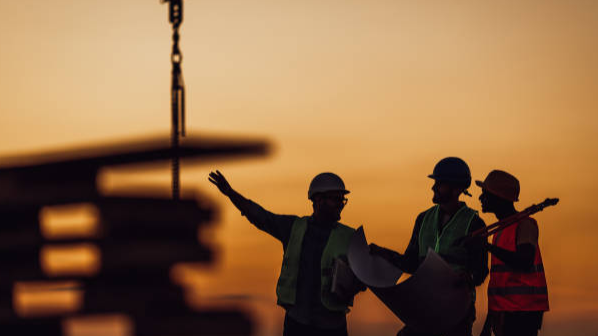
But once we arrived in the field, reality told a different story. The valve we needed to close was buried behind a cluster of pipes, and the gauge was hidden unless you climbed up and leaned over at an awkward angle. What looked like “close valve, verify zero energy” in the procedure (work-as-imagined) actually meant climbing, twisting, and relying on a coworker to steady your footing while you stretched to see (work-as-done). Through improvisation, communicated, and drawing from our past experiences, we completed the task with no incidents
Looking back, I realized the procedure and risk assessment never captured the full story or the reality of the task. They didn’t account for the awkward posture, the hidden gauge, or the workarounds we had to invent. These details only surfaced in the moment, through discussions we had while figuring things out. The workarounds became part of our crew’s experience but remained undocumented and invisible to management resulting in a loss to organizational learning.
This disconnect is not unusual. Work-as-imagined and work-as-done rarely align, and risk slips into that gap.
The often-overlooked reality about risk is that it is not an absolute entity. Risk is not a fixed quantity that can be fully captured on paper or contained within a procedure. Because work is both complex and highly adaptive, risk is always unfolding, shaped by the interaction of people, tasks, internal/external pressures, and environments. To truly understand it, we must move beyond static assessments and embrace the narratives (stories) of those actually doing the work.
According to Rosa Antonia Carrillo (personal communication, July 16, 2025), frontline workers typically communicate and learn through colloquial language and oral tradition, which is deeply rooted in their experience. Since storytelling is already part of how crews communicate and share experience while working, integrating these narratives into risk assessments makes the process more authentic, effective, and grounded in reality. A story about work-as-donecan for instance show the tension of balancing safety and production, the small improvisations that keep a job going, or the subtle risks no one wrote down in a formal risk assessment.
These stories, whether shared in the moment as challenges arise, or afterward during post-job reviews offer insight into how risk is managed in practice. Encouraging such conversations transforms risk from an abstract concept into a lived reality we can learn from. Narratives turn lived experience into shared knowledge. They make the invisible visible and provide workers with a natural way to share risks, challenges, and adaptations in real time.
Frontline workers carry a wealth of knowledge gained through lived experience known as tacit knowledge. This knowledge are personal know-hows that resides within the mind, behavior, and perception of individuals. They include skills, experience, insight, intuition, and judgement that have been developed over the years (Busch, 2008). This knowledge is often difficult to capture in checklists, procedures or even risk assessments. It is typically shared through discussions, stories, and person-to-person interactions. Capturing this knowledge in addition to the formal risk assessment gives us access to life in the tunnel and how employees navigate the complexities of work which often falls beyond the designed scope of work and formal pre-job risk assessment.
Capturing this tacit knowledge alongside formal risk assessments gives us access to ‘life in the tunnel’ the way employees actually navigate the complexities of work, which often fall beyond the designed scope of procedures or pre-job assessments.
When I think back to my days as an operator, this becomes very real. On paper, most tasks always looked straightforward: close a valve, check a gauge, verify isolation. But the real expertise lived with the people on the crew, the ones who knew how to climb into awkward spaces, balance while leaning over piping, or spot the subtle signs that equipment wasn’t behaving as expected.
None of that wisdom ever appeared in the procedure. It lived in stories, in the way we would quietly warn each other, or in the small tricks passed down during a job. That’s why relying on frontline workers is so powerful for any organization on a journey to organizational excellence and true learning.
If we want to capture this knowledge and keep the discussion of hidden risks alive, here are a few practical approaches:
- Ask workers to tell a storyabout the last time they performed the task. What made it easy or difficult? What improvisations were needed? What challenges arose that the procedure didn’t anticipate?
- Debrief after the job, capturing stories of what went right or wrong that the risk assessment didn’t cover, and how the team managed it.
- Create storyboards or informal spaceswhere workers can post and share their experiences and workarounds.
- Ask how they feel about the job before starting. (inspired by a post from Zy Bobbitt, CWI, MSI, CHSTa couple of weeks ago). A simple, genuine question can open the door to real stories and hidden risks.
It is important to note that these approaches only work in a culture of trust and psychological safety. Without that, workers won’t feel safe to share their stories honestly.
Now, I am no means saying or suggesting procedures or risk assessments are unnecessary. To the contrary, they remain essential. But we have to realize that documents alone are limited especially in a complex adaptive system. They can describe steps and hazards yet still miss the living reality of work. Hence, by integrating storytelling into these processes, we humanize risk discussions from its often abstract form. We make it more realistic, more grounded, and more connected to where it truly matters: where the work is actually done.
Sources
Busch, P. (2008). Tacit knowledge in organizational learning (1st ed.). IGI Pub. https://doi.org/10.4018/978-1-59904-501-6