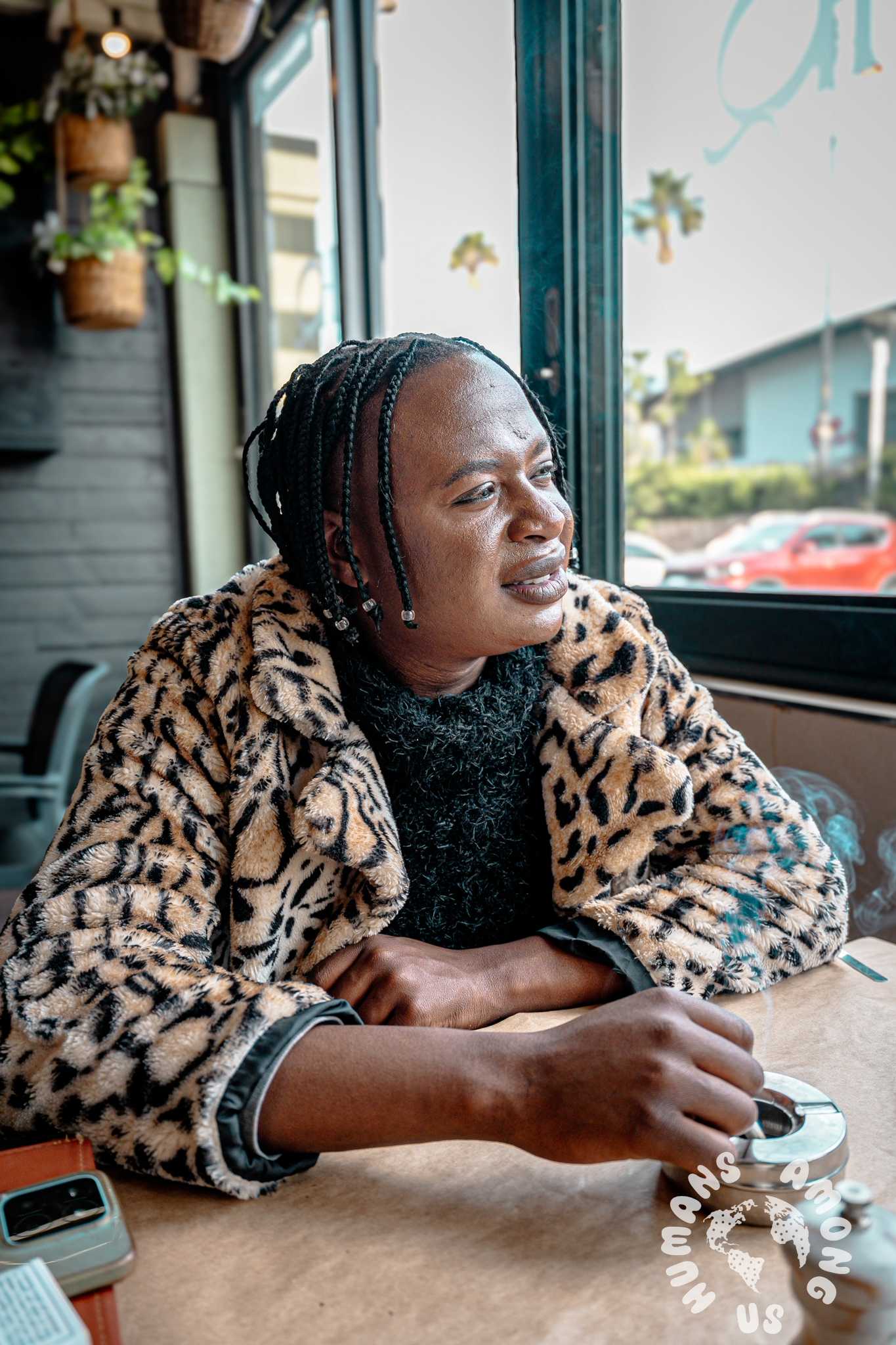
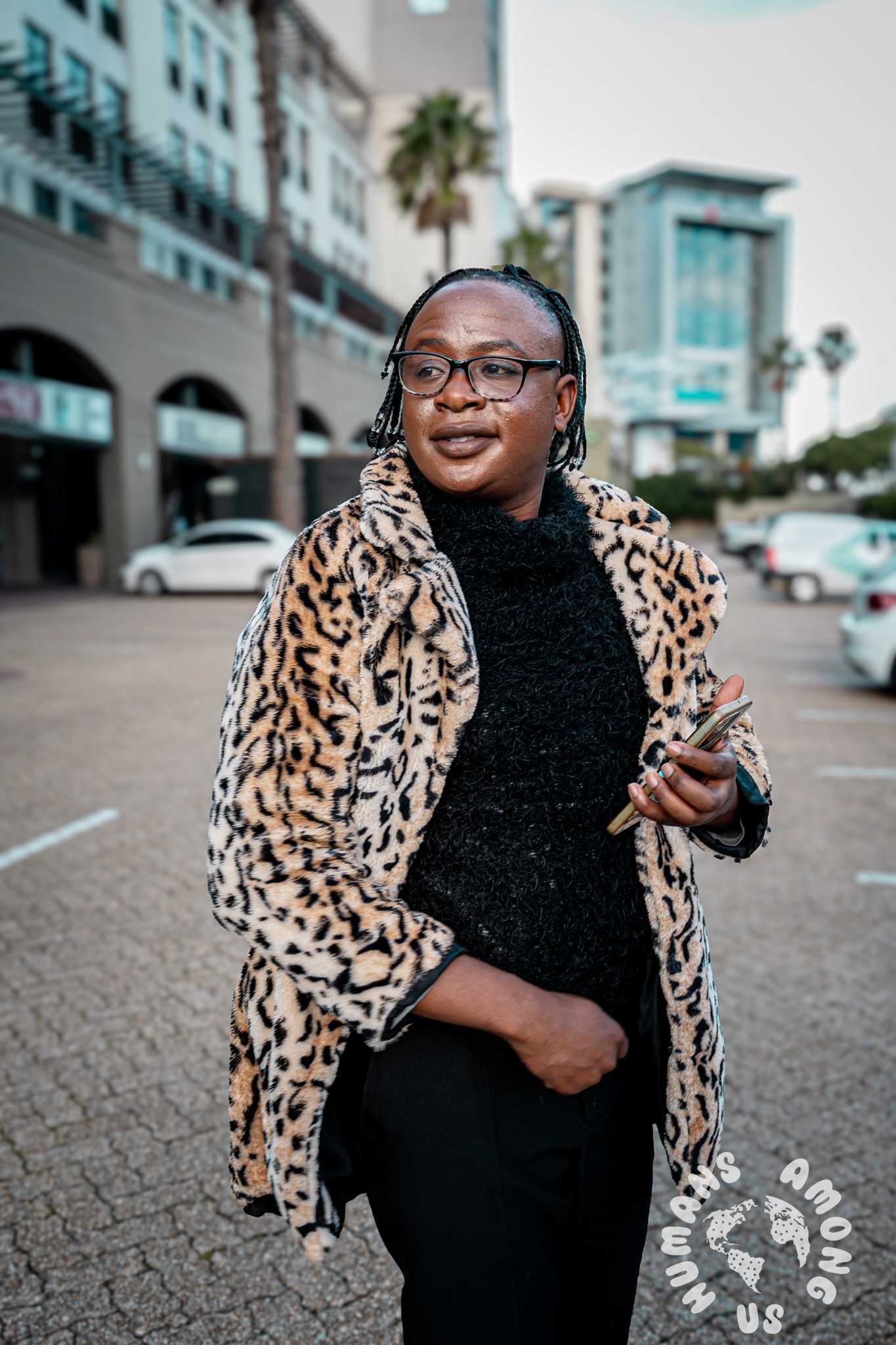
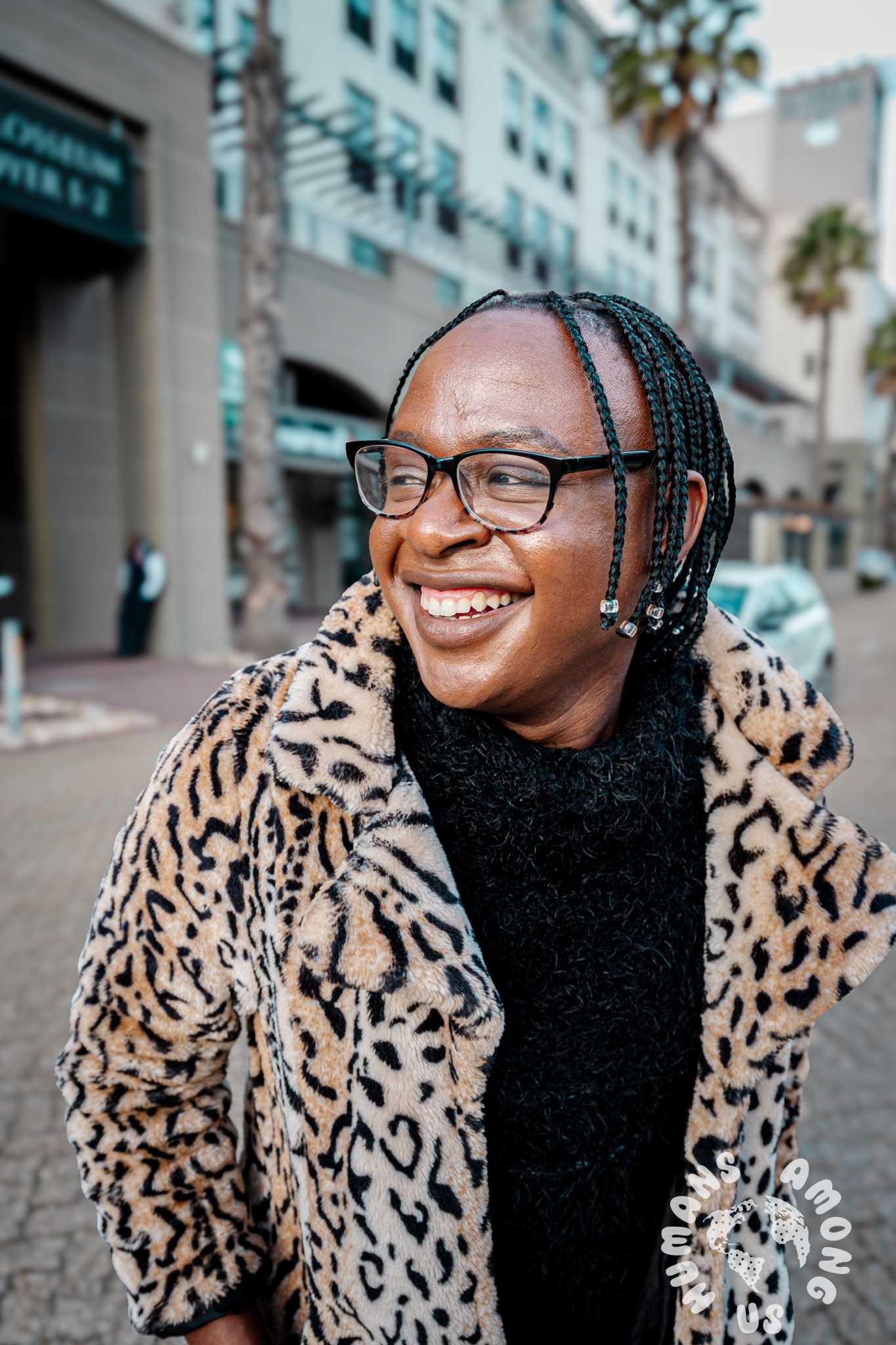
I met Skhumbuzo, who also goes by Method, while walking down a street in Cape Town. We passed each other, and Method gave me one of those deep, unguarded smiles that makes you feel seen. I smiled back. For a moment, neither of us continued walking. There was an immediate connection; something warm and familiar between two people who had never met.
I had my camera with me, so I asked whether I could take Method’s photograph. Method agreed. We exchanged a few words and shared contact information before eventually continuing in different directions. It could easily have ended there, as so many brief encounters with strangers do. Instead, the following day, we found ourselves sitting together over drinks and sharing pieces of our lives as though we had known each other much longer.
Method later told me that this was not the usual road home. Most days, Method followed a different route and was often in a hurry. For some reason, however, Method chose another way that afternoon. That seemingly small decision created a cosmic intersection in which our paths met.
I was only in Cape Town for a short time and had gone out to do some street photography. Rather than returning to my hotel the same way I had come, something in me decided to take a different route. Out of all the streets we could have taken and all the times we might have passed through them, we found ourselves in the same place. Method chose an unfamiliar road, slowed down, and smiled. I changed my route and happened to have my camera in my hand.
Some encounters feel accidental. Others become what my friends Charlie and Ruth taught me to call a bashert moment; a Yiddish expression meaning “meant to be.” I had met Charlie and Ruth during another unexpected encounter in Santa Fe.
Meeting Method felt like that.
│ BETWEEN THE LINES
We often imagine that important moments will announce themselves, but sometimes they begin with an unfamiliar road, a slower pace, and the decision to return a stranger’s smile. Had Method taken the usual route, continued rushing, or simply looked away, there may have been no photograph and no conversation the following day.
Perhaps being open to life is partly about leaving enough room for it to surprise us.
A Name That Remembers
Lately, I have become more interested in what names carry. Drawing from my Ghanaian upbringing, I have never understood a name as merely a label used to identify someone. In many Ghanaian traditions, names are chosen with intention. They may locate a person within a family, mark the circumstances surrounding a birth, preserve the memory of someone who came before, or express what a family hopes a child will carry into the world.
A name does not tell us everything about a person, but it can reveal that a person’s story began before that person was old enough to tell it. For that reason, one of the first questions I asked Method was about the meaning of Skhumbuzo.
Method explained that the name carries the meaning of “remembrance.” Method was born after the death of an older brother, who was only fifteen when he was killed. Method’s mother chose the name in his memory. Before Method had taken a first breath, the name Skhumbuzo was already carrying part of the family’s story.
Method grew up in Soweto, surrounded by extended family, and understood from an early age that education could open possibilities beyond the circumstances of that environment. After working hard through school, Method attended university and earned a degree in public management and governance. The original plan was to work in government and contribute to change within the surrounding systems, but life moved differently.
After graduation, Method lost a father. Then COVID arrived, making employment even more difficult. While attempting to pursue an opportunity abroad, Method was scammed. Money had been raised with the support of people who believed in the opportunity, only for Method to discover that it was not real. Method then had to return to those same people and explain what had happened.
“It was the most heartbreaking thing,” Method told me.
What stood out was the honesty with which Method spoke. There was no attempt to minimize the experience or make the journey sound easier than it had been. Method could speak truthfully about heartbreak without allowing it to become the only thing I saw.
That is part of Method’s spirit. The difficult parts of life are not denied, but neither are they allowed to occupy the entire story.
│ BETWEEN THE LINES
Joy is sometimes mistaken for evidence of a life untouched by difficulty. Method’s joy is different. It does not come from avoiding pain; it comes from refusing to let pain close every door.
Perhaps joy is not the absence of hardship. Perhaps it is the courage to remain available to life after life has given us reasons to withdraw.

More to the Story
A Humans Among Us Store.
Through photography, storytelling, and thoughtfully designed collections, we invite you to slow down, stay curious, and discover the stories that connect us.
Following Another Road
After the scam, one of the women who had contributed money asked whether Method was genuinely passionate about working with children. The woman was connected with an organization that needed someone to help children with their schoolwork, and Method agreed to help.
Method began with ten children. Before long, ten became forty, and forty became fifty. What began as an unexpected opportunity introduced Method to teaching and eventually opened a road beyond South Africa. Over the next several years, Method taught children in Turkey, Indonesia, Thailand, and Vietnam.
As Method showed me photographs from those years, Method’s face lit up. In almost every image, children surrounded Method as they learned, laughed, danced, and created together. The photographs revealed something that words alone could not: Method did not simply work with children. Method came alive around them.
Method described being creative and able to connect with different kinds of people. I could see that in the photographs. The children were not merely standing beside a teacher. They appeared comfortable around someone who genuinely enjoyed being with them and allowed them to bring their own energy into the space.
│ BETWEEN THE LINES
The road we plan is not always the road that reveals our purpose. Method studied with one future in mind, but disappointment redirected that journey toward something that may not have been discovered otherwise.
Purpose does not always arrive as a clear calling. Sometimes it begins with an unexpected invitation and our willingness to say yes.
At Home in the World
As I listened to Method speak about travelling, I began to understand how openness had carried Method so far. Living in another country requires more than getting on an airplane. It asks us to enter unfamiliar cultures, build relationships, and find our footing among people who may experience the world differently.
Method seems naturally open to that kind of encounter. There is curiosity about people, an easy laugh, and a confidence that does not need to dominate a room. Method carries an energy that makes connection feel natural.
Method does not seem to enter new places waiting for them to prove themselves. Instead, Method arrives ready to meet people, learn, teach, dance, and participate in whatever life is offering. The countries changed, but the person in the photographs remained the same: expressive, joyful, honest, and fully present.
Method was not simply passing through those places. Method allowed those places and their people to become part of the journey.
│ BETWEEN THE LINES
Travelling asks us to enter unfamiliar places without losing ourselves. Method appears to carry home within. That inner grounding makes it possible to move through different cultures without abandoning the person at the center.
Maybe openness is not simply a willingness to go somewhere new. Maybe it is allowing somewhere new—and the people we encounter there—to become part of us.
Learning to Live Fully
Method also spoke honestly about the journey of learning to live fully and openly. From a young age, Method knew there was something different about how the world was experienced. While other boys played soccer, Method often preferred playing with the girls. There was not yet enough language to explain those feelings, but there was an awareness that they were part of Method’s identity.
The difficulty was not simply in knowing this internally. It was in wondering whether the people Method loved would continue to see and love Method in the same way if they knew.
For years, that uncertainty shaped what Method shared and what remained hidden. The greatest fear concerned how Method’s father might respond. By the time Method was ready to have the conversation, rejection had already been imagined and the possible loss of their relationship had been rehearsed.
His response was much simpler than the ending Method had imagined.
“You are my child.”
Method’s father explained that he had seen Method all along. He had simply been waiting for Method to feel ready to speak.
That acceptance did not remove every difficulty Method would encounter, nor would the rest of the world always respond with the same grace. But his words offered something deeply important: the freedom to stop hiding from someone whose love mattered greatly.
Today, that freedom is one of the first things you notice about Method. Method is expressive, playful, and honest. There is no apology for taking up space and no attempt to reshape the story to make it more comfortable for other people.
There is something freeing about being around someone who is no longer asking for permission to be seen.
│ BETWEEN THE LINES
Fear can fill silence with a story of its own. Method had prepared for rejection before giving a father the opportunity to respond. While Method was protecting against the possibility of losing his love, that love had been waiting on the other side of the conversation.
Sometimes the people around us already see more than we realize. Perhaps they are not waiting for an explanation. Perhaps they are waiting for us to trust them with the truth of who we are.
Returning Home
Method’s travels eventually led to Vietnam. While Method was there, Method’s mother became seriously ill. Part of the reason for travelling abroad had been to build a better life and provide support for the family, but when Method’s mother needed something more immediate, Method made the difficult decision to return to South Africa.
“My mom is my priority right now,” Method told me.
Returning home meant leaving work and financial stability behind. Since then, Method has experienced unemployment, unpaid bills, and moments when there was not enough money for transportation to a job interview. Still, Method does not regret returning.
Method believes something changed when mother and child saw each other again.
“My mother healed when she saw me,” Method said.
Perhaps not every kind of healing can be measured. Sometimes healing is found in the relief of having someone we love return to our side. Even through the uncertainty of this season, Method’s joy remains. It is not a performance or an attempt to deny the circumstances. Method speaks honestly about what is difficult while continuing to dream beyond it.
│ BETWEEN THE LINES
We often think caring for someone means providing more—more money, greater security, or better opportunities. Those things matter, but there are moments when the most valuable thing we can offer is our presence.
Method travelled far partly to provide for family. In the end, what Method’s mother may have needed most was for Method to come home.
More to the Story
A Humans Among Us Store.
Through photography, storytelling, and thoughtfully designed collections, we invite you to slow down, stay curious, and discover the stories that connect us.
Opening Gates
Today, Method works with Vulamasango, a nonprofit organization in Cape Town whose name means “Open Gates” in isiXhosa. The name feels fitting. Vulamasango supports children from Cape Town’s townships through academic and psychosocial support, life-skills development, arts, sports, music, vocational training, and daily meals.
For Method, this work is more than employment. It connects directly with the part of Method that has always come alive around children. Method still dreams of one day creating a school or organization where children from disadvantaged communities can learn, find support, speak openly, and gain access to opportunities that might otherwise remain beyond their reach.
“I want us to work to survive, to live, to prosper,” Method told me.
That dream is still taking shape, but Method is not waiting for some distant future to begin living it. Through the work at Vulamasango, Method is already helping to open gates for children.
│ BETWEEN THE LINES
We often think purpose begins only when we finally create something with our own name on it, but purpose can begin much earlier. Sometimes it is found in contributing to work that already reflects what we care about. Sometimes we prepare for the future by serving where we are.
Method hopes to open doors for children one day. In many ways, that work has already begun.
Still Dreaming
Method wants to travel again, continue teaching, and fulfill a childhood dream of visiting the United States. Method also believes deeply in the meeting of life and time.
“You are where you are supposed to be at the right time for the right reason,” Method said.
I do not know whether every difficult moment has a reason, and I am not sure every experience needs to be given one. While we are living through disappointment, loss, or uncertainty, those experiences often feel exactly as they are—painful, confusing, and unfair. Yet Method’s journey reminded me that we rarely understand the full meaning of a moment while standing inside it.
The disappointment, the opportunity that did not work out, the unexpected return home, the road we do not normally take, and the stranger we almost walk past may become connected in ways we cannot yet see.
What Stayed with Me
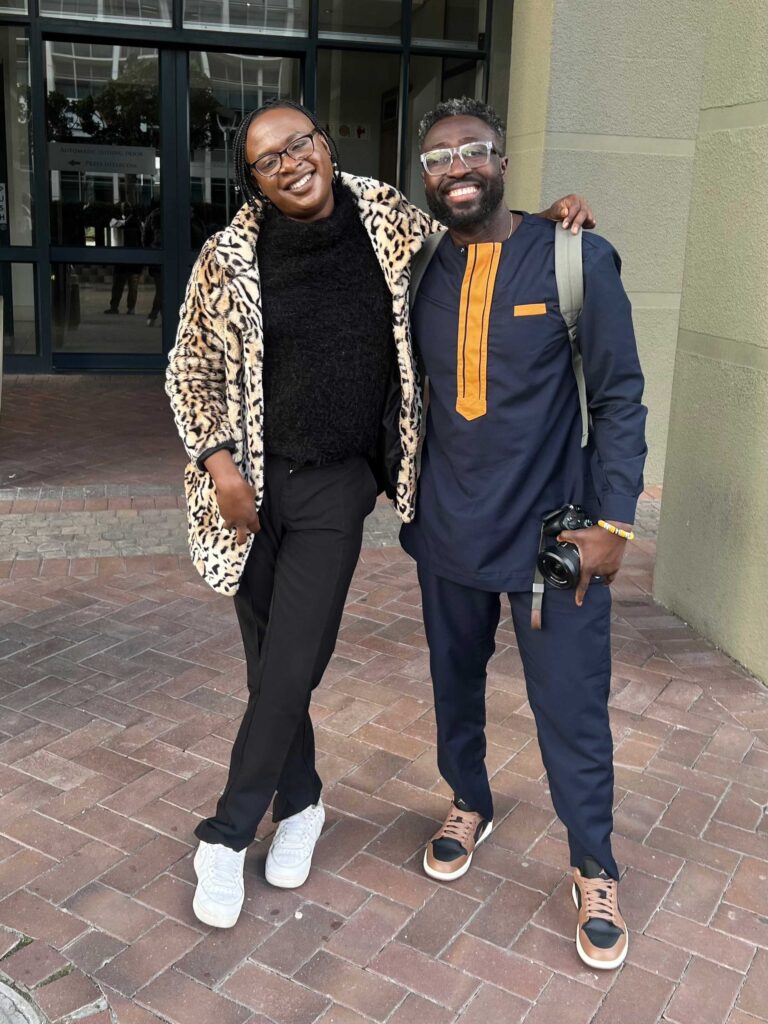
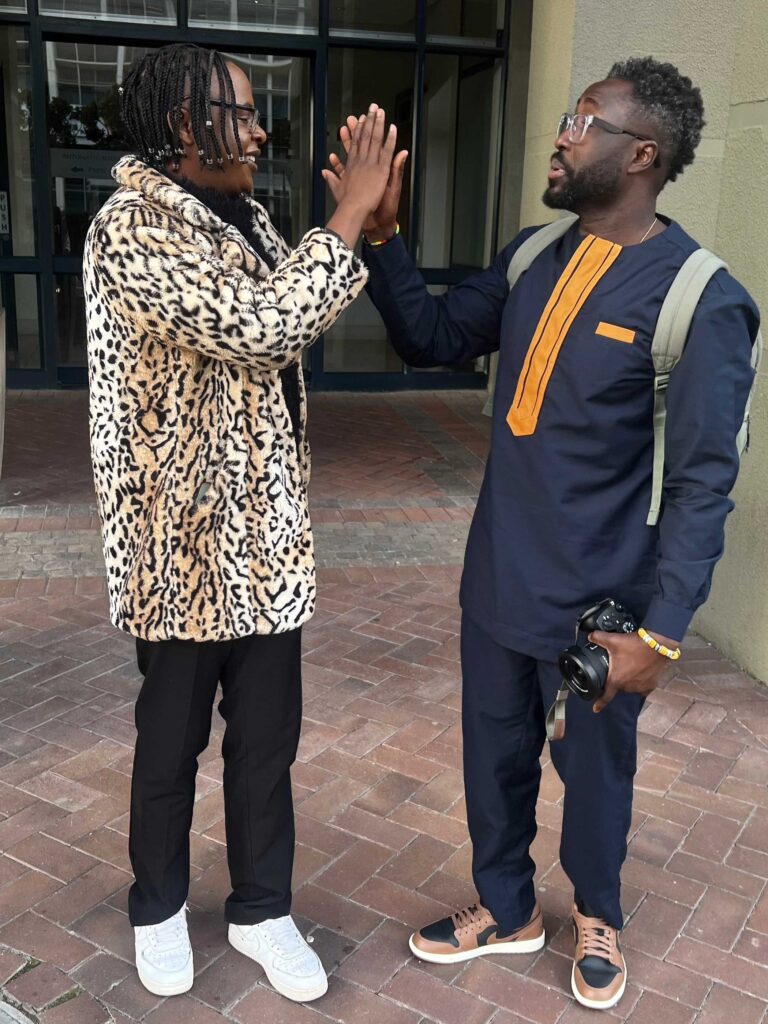
When I photographed Method on that Cape Town street, I knew none of this. I did not know the meaning carried in the name Skhumbuzo, the experiences of growing up in Soweto, the countries Method had travelled through, the children Method had taught, the mother Method had returned home for, or the courage it had taken to live openly.
I knew only that Method had smiled at me and that something in Method’s spirit made me stop.
The following day, the stranger in my photograph became a person whose joy, honesty, confidence, and openness to life stayed with me. Perhaps our meeting was evidence of the same qualities that have carried Method across countries and into the lives of so many people. Method chose a different road, slowed down, noticed someone unfamiliar, and trusted the moment enough to smile.
That is Method: full of life, open to people, honest about the journey, confident in the person Method is becoming, and still willing to believe that life has more waiting ahead.
Some people enter our lives slowly. Others appear on an ordinary street and remind us that a stranger can be only one smile away from becoming part of our story.
Perhaps Method and I did not simply happen to cross paths in Cape Town.
Perhaps we were meant to meet.