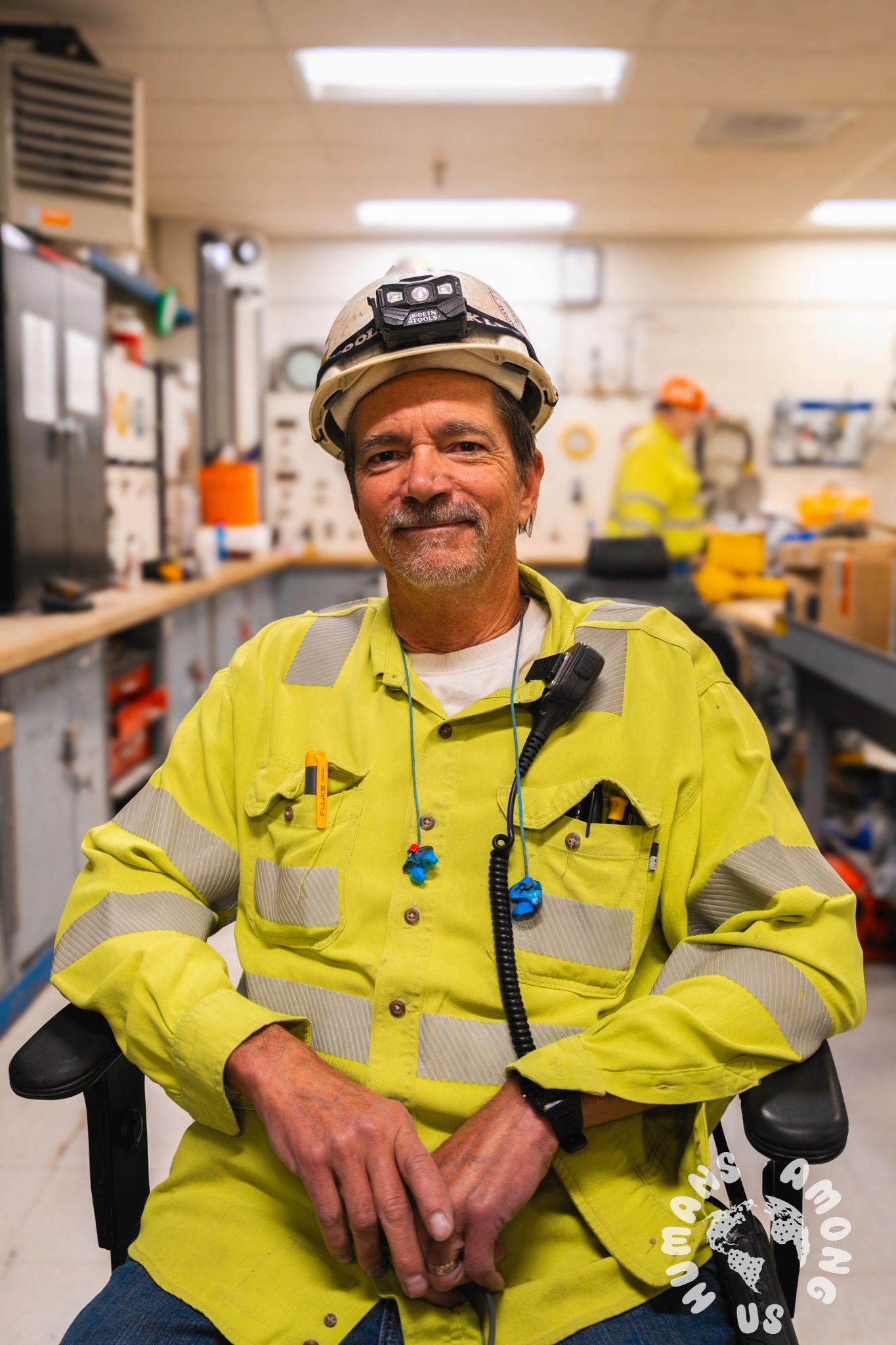
A retirement story captured by Charles Tetteh
After forty-eight years of full-time service, Jeff is preparing to retire from the company where he has spent nearly his entire adult life. His journey began with a cowboy hat, a struggling Buick, and an imagined version of Wyoming that did not survive his arrival.
Before moving west in 1976, Jeff bought himself a cowboy hat. He had recently graduated from high school in Michigan, and almost everything he knew about Wyoming came from Western movies. In his imagination, Wyoming was filled with cowboys, open land, and endless stretches of sagebrush.
If he was going to live there, he figured he should look the part. “I thought everybody out here wore a cowboy hat, so I had to have a cowboy hat,” he remembers. When Jeff arrived, he discovered that almost everyone wore ball caps.
It was his first lesson in the distance between the stories we inherit about a place and the reality we encounter when we finally arrive.
The Road West
Jeff’s father had moved to Wyoming the year before. After high school, Jeff followed him west to work as a summer hire in the trona mines. The journey nearly ended before Jeff arrived. Somewhere beyond Nebraska, the engine in his 1968 Buick LeSabre lost a cylinder. Everything he owned was packed inside the car. Turning around would not have solved much, so he kept driving. The wounded Buick crossed Wyoming on seven cylinders, carrying Jeff toward a place he had never seen.
The landscape looked nothing like Michigan. There were buttes, miles of sagebrush, and stretches of open land that seemed to come directly from the Western movies he had watched.
The work felt like another world as well. Jeff had left a job at a daily newspaper and entered the physically demanding environment of an underground mine. Even at $4.18 an hour, he was earning twice as much as he had before. “I thought, this is great,” he says. What began as a summer opportunity in 1976 eventually became something much larger. Jeff returned to the company as a full-time employee in February 1978.
│ BETWEEN THE LINES
Most meaningful journeys begin with an incomplete picture of where we are going. We carry expectations shaped by other people’s stories until experience gives us a story of our own.
Jeff’s cowboy hat did not help him understand Wyoming. Showing up did. Sometimes the life waiting for us begins where our assumptions end.
Learning How Things Work
Jeff began his full-time career as an electrician, but his path through the company was not a straight one. A layoff in the mid-1980s moved him through different parts of the operation. He worked in process, returned underground, moved into the plant, and eventually found his way into instrumentation.
Each transition required him to learn again, and Jeff did not mind that. “I like doing something different every day,” he says. Instrumentation suited the part of him that always wanted to know how things worked. Troubleshooting placed him in situations where the answer was not immediately visible. “What makes it work?” he would ask. “Why does it do that?”
To Jeff, a failure was not simply something to repair. It was something to understand. His curiosity also showed in the quality of his work. When new oxygen probes were installed in the boilers, Jeff ran quarter-inch tubing from the control panels to each probe. He carefully bent and positioned the lines so the completed work looked clean and intentional. He also contributed to the conversion of the boiler igniters from oil to gas.
When asked whether he felt proud of those projects, Jeff hesitated to accept individual credit. “It wasn’t me,” he says. “That was everybody involved.”
One coworker, who has known Jeff for more than twenty years and worked beside him for seventeen, saw that same persistence in the way Jeff responded to changing pH conditions and other difficult plant problems. “Don’t give up on stuff,” the coworker said when describing what Jeff taught him.
Jeff did not keep working at a problem simply because he enjoyed solving technical puzzles. He wanted the solution to make the equipment perform better and make the operator’s job easier. For Jeff, the work was never only about the equipment. It was also about the people working around it.
│ BETWEEN THE LINES
Curiosity changes our relationship with problems. Instead of asking only how quickly something can be repaired, it invites us to ask what the problem might be teaching us.
Jeff’s response also reminds us that very little meaningful work belongs entirely to one person. Even when one person’s contribution is visible, other hands, experiences, and relationships usually stand behind it.


More to the Story
A Humans Among Us Store.
Through photography, storytelling, and thoughtfully designed collections, we invite you to slow down, stay curious, and discover the stories that connect us.
The People Who Showed Him the Way
When Jeff reflects on his career, he remembers the people as clearly as he remembers the work. Some remain in his memory because they were unforgettable characters. He remembers an operator, Bob Rowe; nicknames Turtle who resembled Willie Nelson and often smoked Swisher Sweets and sometimes played his harmonica in the work area. “People like that stick in your brain,” Jeff says.
Others stayed with him because of what they taught him.
When Jeff moved into instrumentation, he noticed that Mike Voss could run tubing exceptionally well. Mike’s finished work was precise, clean, and carefully arranged. Jeff wanted to develop that same level of skill, so he watched Mike work and asked him to share what he knew. Mike taught Jeff more than how to run tubing. He also taught him to remain persistent when a job became difficult. “He wouldn’t accept no for an answer,” Jeff remembers. “Get out there, fix it, figure it out.”
That persistence became part of Jeff’s approach. Over time, he developed a reputation for staying with a problem until he understood what was happening. “I’ll find out what’s going on,” he says. Mike’s willingness to teach also shaped what Jeff came to believe about leadership.
“You want to basically be training your replacement,” Jeff says.
That requires someone to resist the temptation to protect what they know. It means demonstrating the work, explaining what experience has taught them, and preparing someone else to continue without them. Jeff did not need a management title to lead that way. Whenever a new employee was assigned to him, he tried to teach that person about the area, the work, and the hazards they needed to understand.
“Any chance I get to help somebody, if they want to learn,” he says.
The lessons Mike shared with Jeff did not end with Jeff. They traveled through him to the people who worked beside him during the decades that followed.
│ BETWEEN THE LINES
The influence of a mentor may not become visible until years after a lesson is given. We recognize it when we hear their words in our own voice, see their standards in our work, or find ourselves teaching someone as patiently as they once taught us.
Knowledge becomes a legacy only when it is shared. Leadership is not demonstrated by making others dependent upon us. It is demonstrated by preparing them to continue after we are gone.
What Would Jeff Do?
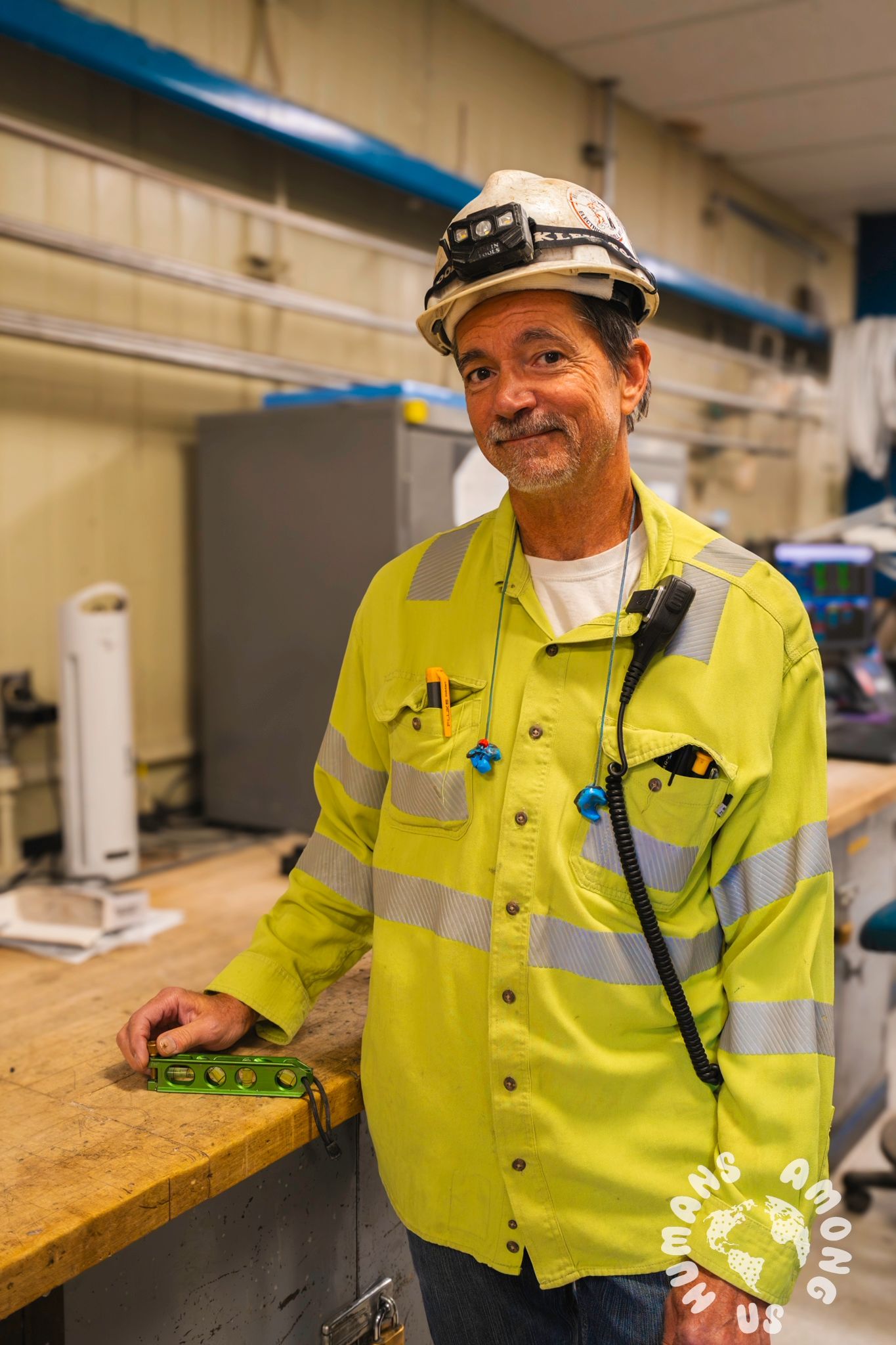
Around the shop, Jeff’s attention to detail became a running joke. When someone faced a decision about how to complete a job, they might ask: “What would Jeff do?” Jeff laughs when he talks about it.
“I’m sometimes a little picky about how things are done. That’s all.”
His coworkers are less reserved in their description. They call him a perfectionist. One remembered Jeff carrying a level while installing conduit in an elevator shaft. When the coworker pointed out that the shaft itself was not plumb, the joke became that Jeff’s perfectly aligned conduit might be the only level thing in the entire structure.
Another coworker summed it up this way:
“Even though the rest of the plant might not be level, his work is level.”
The stories are funny because they reveal something recognizable about Jeff. They also show what people learned to expect from him. A person’s reputation develops through the problems they refuse to abandon, the details they notice, and the standards they maintain when no one is watching. “What would Jeff do?” became shorthand for approaching the work carefully and doing it well.
Jeff does not want to be remembered only for his technical ability. He hopes people remember that he worked hard, treated others respectfully, and was enjoyable to work with.
“Hopefully, make people smile when you come out and be easy and fun to work with,” he says.
His coworkers remember those qualities too. They describe someone who was willing to help, but they also remember the smaller details that made him distinctly Jeff; such as his habit of using baby wipes to clean his hands working underground before lunch while everyone else simply washed off what they jokingly called “the big chunks.”
After decades of working together, these ordinary memories matter. They remind us that a career is not experienced only through projects, production, and equipment. It is also built through laughter, habits, conversations, and the familiar presence of people who become part of our daily lives.
│ BETWEEN THE LINES
Our values are not revealed only by what we claim matters to us. They are revealed through the patterns other people learn to expect from us.
Long before Jeff’s coworkers turned his name into a question, his daily choices had already become an answer.
Learning What Can Hurt You
Jeff’s attention to detail was not limited to how the finished work looked. It also shaped how he thought about safety. Working around electricity, pressure, machinery, and changing plant conditions taught him that what appears safe may not always be safe. For Jeff, safety knowledge began with learning what could hurt him.
“Most of the time, it’s common sense,” he says. “When you learn what can hurt you, that’s part of it.”
However, much of what we call common sense is knowledge someone first had to give us. When Jeff began working underground, experienced miners pointed out hazards he had never encountered. One involved the high-voltage trailing cables used to power underground equipment. “You don’t grab a trailing cable with your bare hands,” he remembers being told. “You get a hot stick to do it because they get pinhole leaks in them.”
Jeff did not arrive knowing that. Someone with more experience recognized the danger and warned him before he had to learn the lesson through injury.
“That was an eye-opener,” he says.
Years later, Jeff was working on a water-level sensor connected to the drum of C Boiler. He and a coworker had been told that the equipment was no longer pressurized. Jeff’s experience, however, told him not to assume that all the pressure had been released. Before removing the sensor, Jeff told his coworker to stand to the side and remain outside its potential path. When they began pulling the sensor, residual pressure forced it out. It traveled across the area and struck a wall approximately twenty feet behind them.
No one could see the pressure that remained inside the system. What protected them was Jeff’s willingness to question whether the condition was truly what they had been told it was.
Jeff believes procedures are important, but he also understands their limitations.
“If you are writing a safety procedure for something, you are going to miss something,” he says. “You can’t cover everything.”
His point is not that procedures are unnecessary. It is that written instructions cannot anticipate every condition people will encounter. Workers must still observe, think, ask questions, and remain attentive to what is actually happening in front of them.
Jeff tried to pass that awareness to the people who followed him on jobs. He showed them what to watch for and explained what could happen if a hazard was overlooked. His purpose was simple: he wanted the person beside him to recognize danger before experience delivered the lesson more painfully.
He is also honest about the complicated relationship between experience and safety.
“I’m probably not always the safest person,” Jeff admits, “but I usually have a good sense of what I can get away with.”
There is an important tension in those words.
Experience can sharpen a person’s ability to recognize weak signals, anticipate hidden energy, and notice when the conditions do not match the plan. However, those same years of experience can also make danger feel familiar and move the boundaries of what a person believes they can manage.
That is why safety knowledge cannot remain inside one person. It needs to be shared, questioned, and tested through conversation. The goal is not simply to teach the next person what an experienced worker believes they can get away with. It is to help them understand what could happen, what signs to notice, and when the situation requires everyone to step back.
Jeff’s safety legacy is not a story of encountering work without danger. It is a story of people warning him about hazards he could not yet see, experience teaching him to question conditions that appeared safe, and his effort to pass those lessons to those who came behind him.
│ BETWEEN THE LINES
What we often call common sense is usually inherited experience. Someone noticed something before us, survived something we have not encountered, and cared enough to share the lesson.
Procedures carry part of an organization’s knowledge, but they cannot carry all of it. The rest lives in stories, observations, close calls, habits, and conversations between people doing the work.
Experience is valuable, but it is not infallible. It can sharpen our ability to recognize danger while also making us more comfortable around it. Safety requires us to respect experience without allowing familiarity to become certainty.
Learning People’s Stories
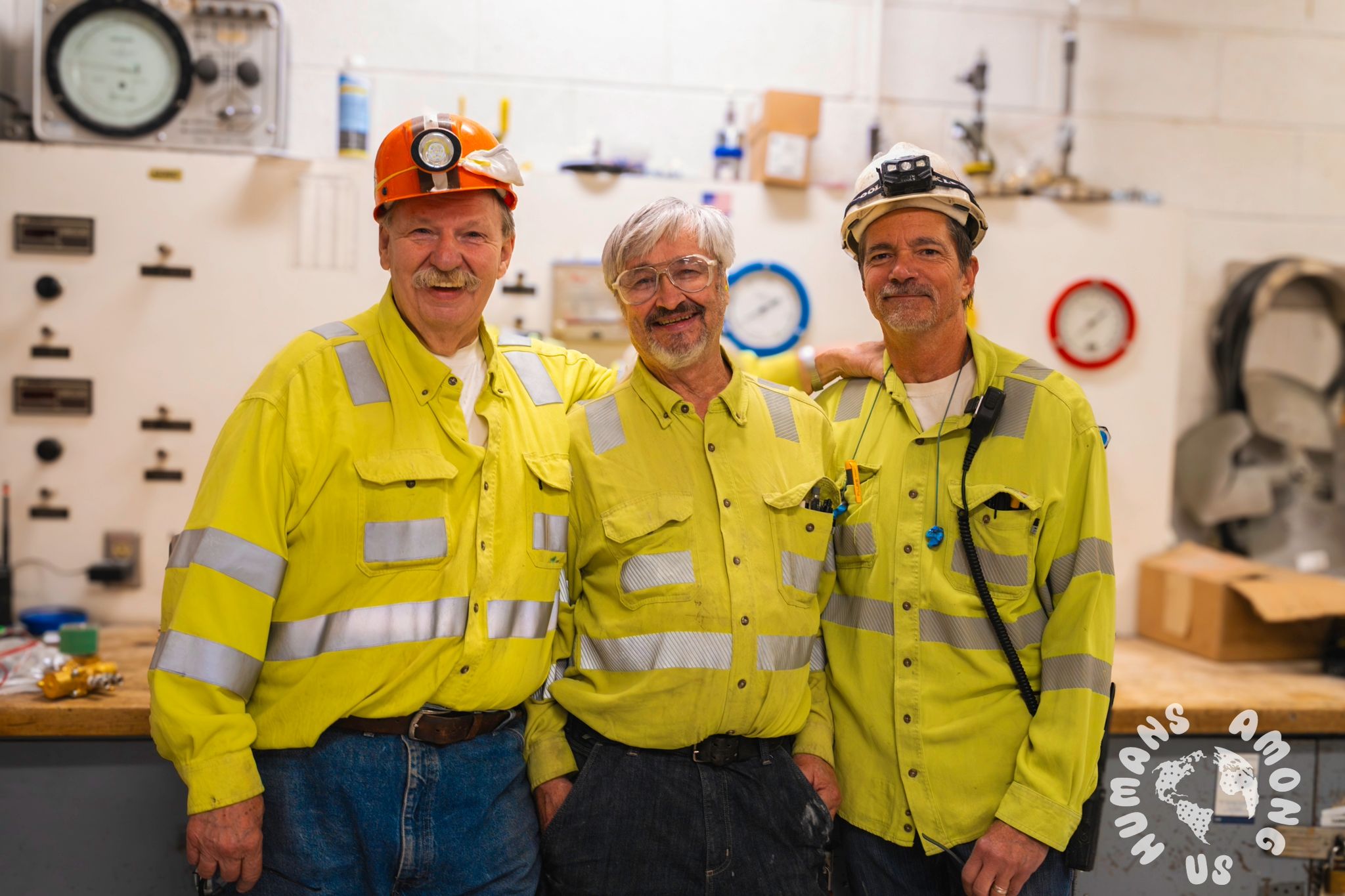
Jeff’s curiosity extended beyond equipment. When he was called to an area during an off shift, he would complete the work and sometimes remain there to talk with the operator.
“What’s going on?” he would ask. “How are things with you?” Then he would listen. Over time, those conversations taught him what people were carrying beyond the work in front of them. “You hear everybody’s story,” he says. “It helps you keep your story in perspective.” The person beside us may be carrying financial pressure, trouble at home, a health concern, grief, fear, or questions they have not found the words to ask.
“Everybody might be dealing with all kinds of issues,” Jeff says. “Who knows?”
That awareness shaped how he treated people and the kind of leaders he respected.
Jeff speaks warmly about Roger, a plant leader whom he also came to know through United Way. He admired Roger’s ability to connect with people and resist the familiar division between management and the union.
“He always tried not to make it us against them,” Jeff says. “I really think this place is a better place because of him.”
Roger’s influence was not limited to his responsibilities or decisions. People experienced him as someone who genuinely cared.
That, to Jeff, is the difference leadership can make.
│ BETWEEN THE LINES
We can work beside someone for years and still know very little about the life that person returns to when the shift ends.
Understanding begins when we become interested enough to ask and patient enough to listen. We may not be able to change what another person is carrying, but being seen can make the weight feel less solitary.
When the Road Changes
Jeff’s life outside the plant did not follow a straight path either. After eighteen years with the company, there was a time when he wanted to leave. He had a college degree, years of experience, and what he believed was a strong résumé. No one hired him. The closed doors were frustrating then. Looking back, Jeff sees them differently.
“It wasn’t meant for me to leave here,” he says. “I was meant to stay here for some reason. And I am glad I did. I don’t look back with regret, not at all.”
“Meant to be” became one of the ways Jeff learned to understand his journey. He does not use those words because everything happened as he hoped. It did not.
A long strike placed significant pressure on his finances and family. His life included the end of relationships, profound loss, and the difficulty of rebuilding when events did not follow the path he once imagined.
When Jeff considers what he would tell his younger self, he talks about preparing more carefully for the future. He wishes he had understood money differently, invested earlier, and planned for a retirement he never stopped to imagine.
Many people, he observes, have paid off their homes by the time they are fifty. “That wasn’t my story,” he says. Jeff’s story required him to begin again more than once. His experience taught him that starting over does not mean a life has failed. Sometimes it simply means the road changed.
│ BETWEEN THE LINES
We often measure our lives against timelines borrowed from someone else’s journey. We compare what we own, when we became established, and where we believe we should have arrived by a certain age.
A life is not diminished because it required rebuilding. Sometimes resilience is not remaining on the original path. It is finding the courage to continue after that path disappears.
More Than the Work
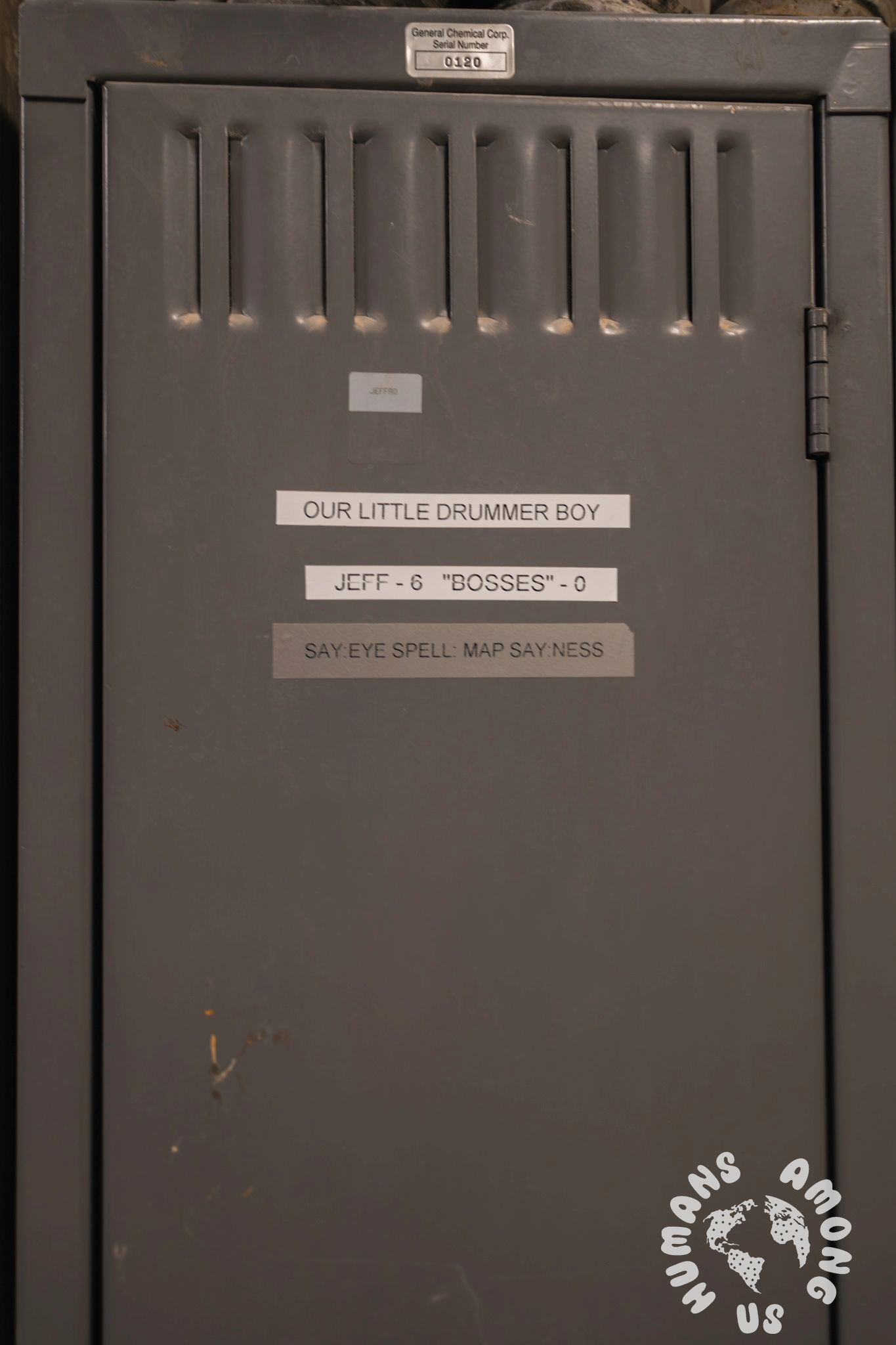
Through the changes in Jeff’s life, music remained one of his constants. He began playing drums shortly after college when friends with instruments needed a drummer. Jeff had never participated in his school band, but he decided to learn.
That decision led to years of playing country, classic rock, and original music with nearly ten bands. Music became more than a hobby. Jeff can put on his headphones, play along with a song, and feel everything else become quiet.
“It’s like my drug,” he says. “It’s my release. It’s my escape. It’s my happy place.”
For a while, there is no equipment to troubleshoot, no decision to make, and no problem waiting to be solved. “The world goes away.”
After forty-eight years in a demanding working environment, Jeff understands the importance of having something that reminds us we are more than our jobs. For him, that place has always had a rhythm.
│ BETWEEN THE LINES
We all need somewhere the world becomes quiet—a place that does not ask us to produce, solve, or prove anything.
The things that restore us are not distractions from a meaningful life. They often give us enough of ourselves back to continue living one.
Becoming the One to Talk
Some of Jeff’s deepest lessons came from experiences he would never have chosen. He has lost people he loved to suicide, including his late wife.
Jeff speaks about her with love. Her death left him with the painful questions that often follow suicide loss and the feeling that perhaps something could have been noticed or done differently.
“Anytime anybody loses someone they love, there’s always, ‘I could have done something. I should have done something. Why did I not see it?’”
Jeff later experienced another suicide loss within his family. Those losses deepened his awareness of how much pain people can carry without others recognizing it. They also strengthened his desire to make himself available.
Jeff completed suicide-prevention training and hopes to become more involved after retirement. He wears a hoodie connected to a mental-health and suicide-prevention initiative. Across the front is a simple invitation:
Be the One to Talk.
For Jeff, those words are not about having all the answers. They are about letting another person know that someone is willing to listen. “If I can be there for somebody,” he says, “be the one to talk.”
Jeff has also witnessed how experience can be transformed into service within his own family. After struggling with alcohol, his oldest son stopped drinking and began mentoring others facing similar experiences. Jeff cannot hide his pride.
“Now, guess what?” he says. “He’s a mentor for other people.”
It is the same pattern that shaped Jeff’s working life. Someone learns through experience, survives something difficult, and then turns around to help the person coming behind them.
│ BETWEEN THE LINES
Pain does not always announce itself. It can exist behind familiar faces, ordinary conversations, and people who appear to be managing life well.
We may not know the right words or have the ability to solve what another person is facing. We can still become someone who notices, asks, listens, and stays.
A Life of Quiet Service
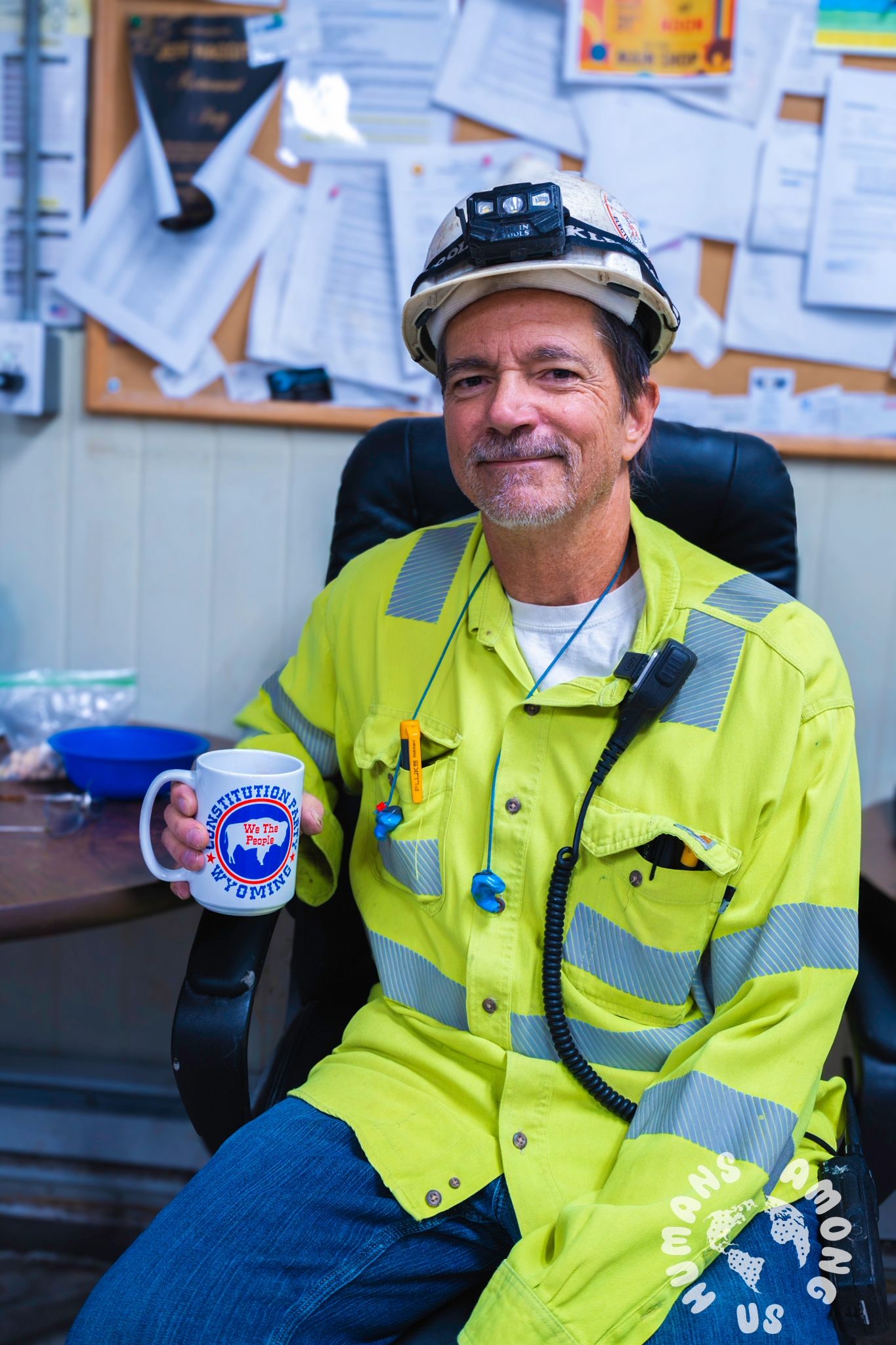
Jeff’s desire to help extends beyond the plant. For years, he served with United Way, listening as organizations described the needs within their communities and helping determine where resources could make a difference. He became involved partly because he saw people he knew already serving.
“I saw that, and I wanted to be part of that,” he says.
Jeff does not describe his community involvement as something he carefully planned.
“It just organically happened.”
Jeff has also participated in politics, serving as chairman and later vice chairman of the Constitution Party in Wyoming. He does not expect everyone to agree with him. He describes himself as someone who tries to understand more than one perspective.
“I listen and hear both sides,” he says.
His political involvement allows him to raise issues he believes are being overlooked and introduce perspectives that might otherwise remain outside the conversation.
Whether he is in a control room, a community meeting, a political forum, or a conversation about mental health, the thread is consistent.Jeff wants to understand. He wants people to feel heard, and whenever possible, he wants to help.
│ BETWEEN THE LINES
Purpose does not always arrive through one defining moment. Sometimes it forms through a series of small decisions to participate, contribute, and remain open to the needs around us.
Service begins when we stop asking whether we can solve everything and begin asking where we can be useful.
The Respect Earned Quietly
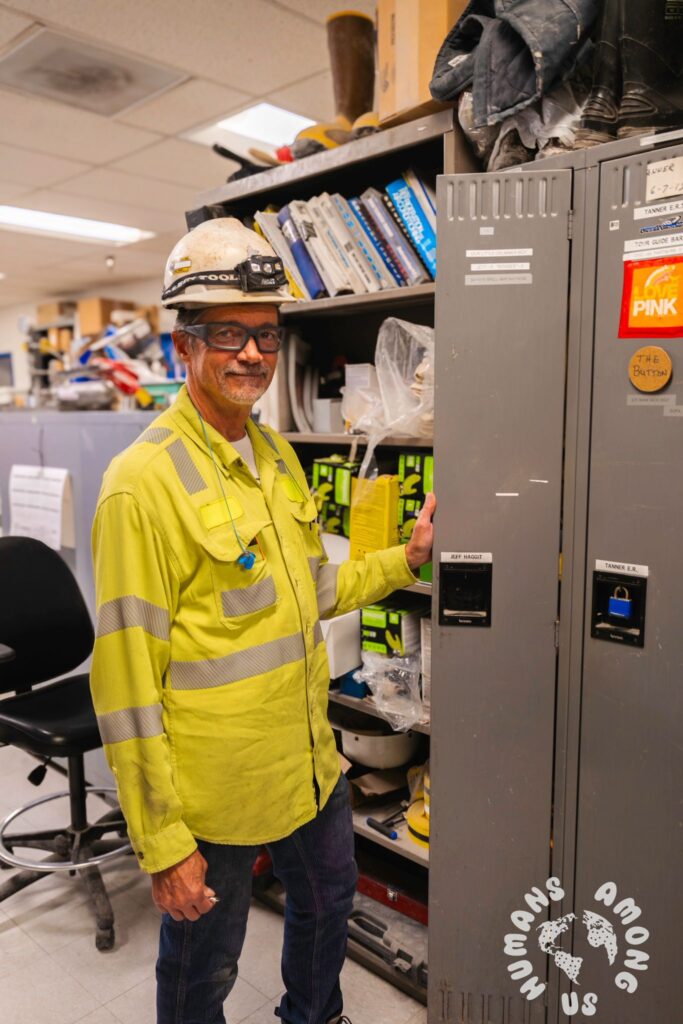
At sixty-eight, Jeff is preparing to retire after forty-eight years of full-time service. During those years, he worked across different parts of the operation, adapted through layoffs and organizational changes, learned from experienced coworkers, and eventually became one of the people others turned to for guidance.
Retirement does not mean he is preparing to stop contributing. Jeff has created an LLC and is taking classes to become a home inspector. The new direction seems well suited to someone who has spent a lifetime examining details, troubleshooting problems, and asking how things work. The company has also asked him to complete the necessary paperwork so he may potentially return as a consultant. The invitation surprised him, but his ninety-two-year-old father was less surprised.
“You might not know it,” his father told him, “but I know it. You are very respected out there.” The stories told by Jeff’s coworkers suggest that his father is right.
Respect does not always arrive through a title, ceremony, or award. Sometimes it appears in the employee who remembers what you taught them, the operator who trusts you enough to share what is happening at home, or the organization that still values your knowledge after you retire.
Sometimes it is heard in the stories people tell about your level, your baby wipes, and the standards you refused to lower. It is also present in the question coworkers learned to ask whenever they wanted to do a job well:
“What would Jeff do?”
│ BETWEEN THE LINES
Our influence is often clearer to the people around us than it is to us. We may search for evidence of our value in recognition, position, or achievement while overlooking the trust we have earned and the people who carry something we gave them.
Forty-eight years of work cannot be measured only through hours, projects, or equipment repaired. The deeper measure is found in the knowledge shared, the people encouraged, and the standards that remain after someone leaves.
It Might Be So Subtle
Near the end of our conversation, I asked Jeff a question with no simple answer:
Why do you think you are here on earth?
Jeff believes there is a purpose to life, although he is still trying to understand his own. “I’m still waiting for an answer,” he says.
Then he pauses and considers another possibility.
“It might be so subtle that you are doing it, and you don’t even know.”
Perhaps, he wonders, the answer is somewhere in leadership or mentoring. Perhaps it can be found in someone he has already helped or in a person he has not yet met. It is difficult to measure the influence of a life while we are still living it.
Jeff arrived in Wyoming wearing a cowboy hat, driving a wounded Buick, and carrying everything he owned. He did not arrive with a forty-eight-year plan. He simply kept going. He learned from those ahead of him and shared what he knew with those coming behind him. He remained curious, questioned conditions that did not feel right, listened to people’s stories, rebuilt when life changed, and tried to be available when someone needed to talk.
Now, after forty-eight years of full-time service, Jeff may still be wondering about his purpose. His father, coworkers, mentees, family, and community may already be able to see it.
Perhaps purpose is not always a single calling waiting to be discovered. Sometimes it is carried quietly through the way we work, the care we take, the knowledge we pass forward, and the space we create for another person to feel heard.
It can be so subtle that we are already living it and do not even know.
│ BETWEEN THE LINES
We often imagine purpose as something extraordinary that we must eventually discover. Perhaps purpose is less about finding one grand answer and more about recognizing the life we are already creating.
Jeff’s forty-eight years remind us that a career is more than the work a person completes. It is also the knowledge they pass forward, the relationships they build, the people who feel heard in their presence, and the questions others continue to ask after they leave.
Perhaps the question is not only, “What am I here to do?”
Perhaps it is also, “What is already happening through the way I live?”
What Stayed With Me
I have known Jeff for about five years.
Whenever I saw him at work, I would say hello, and he would usually respond with the warmth and smile I had come to associate with him. I always sensed something welcoming about his presence, even though most of our interactions were brief.
It was only after sitting with him, listening to his story, and speaking with some of the people who worked beside him that I began to understand more of the man behind that familiar smile.
I learned about the young man who drove across the country in a struggling Buick, unaware that he was beginning a forty-eight-year career. I learned about the mentors who shaped him, the coworkers he taught, the dangers that sharpened his judgment, the losses he carried, the roads he had to rebuild, and the quiet ways he continued to serve others.
The warmth I had always felt around Jeff did not come from a life without hardship. Perhaps it came from experiencing enough of life to understand that everyone is carrying something—and choosing to meet people with curiosity, humor, and kindness anyway.
That is what can happen when we slow down long enough to learn someone’s story.
A person we have greeted for years becomes more than the role through which we know them. The familiar smile develops a history. Ordinary conversations begin to carry more meaning. We recognize that the person standing before us has lived through chapters we could never have seen from the outside.
Jeff, thank you for trusting me with some of those chapters. Thank you for your openness, honesty, and willingness to let me see beyond the person I had passed in the plant for five years.
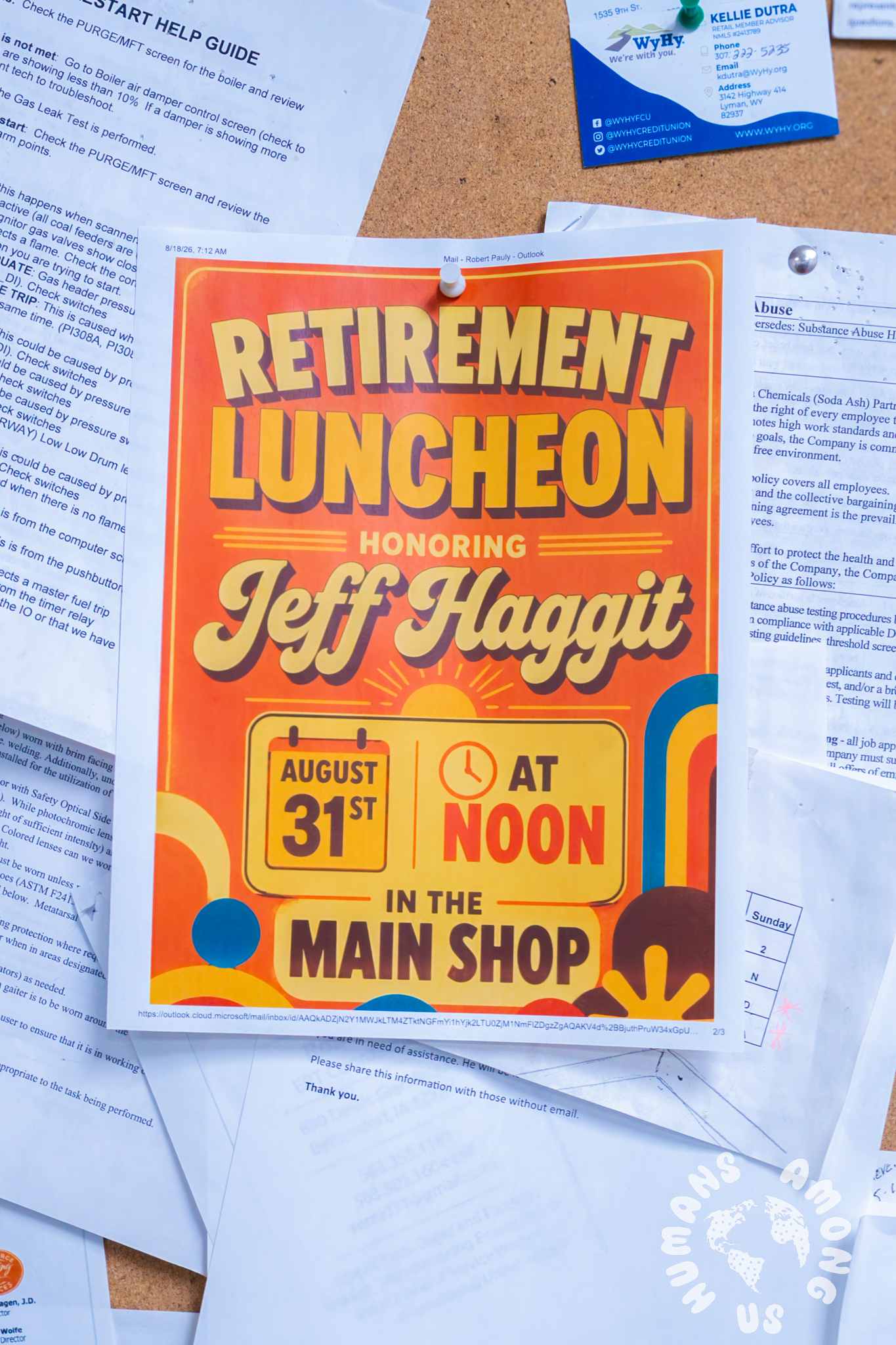
Today, the people who have worked beside you will gather to celebrate your retirement and the closing of an extraordinary forty-eight-year chapter.
This photograph of the announcement pinned to the shop bulletin board may look like a simple invitation to a retirement luncheon. But behind Jeff’s name are nearly five decades of work, relationships, lessons, laughter, challenges, and memories. The papers surrounding it speak to the work that continues. The announcement in the center reminds us to pause and honor the person who helped carry that work for so long.
As you step into retirement, I hope you recognize what your father and coworkers already see. Your influence lives in more than the work you completed. It lives in the people you taught, the standards you established, the stories you listened to, and the knowledge others will continue carrying after you leave.
Today is not only a celebration of the years you gave. It is also a celebration of everything from those years that will remain.
Maybe that is the quiet answer to the question of purpose.; sometimes we do not have to find it. sometimes the people whose lives we have touched can already see it in us.
Congratulations on your retirement, Jeff. May the chapter ahead give you the same opportunity to keep learning, serving, and becoming the one others can talk to.
And whenever the people you leave behind find themselves facing a difficult problem, I imagine one familiar question will continue to be asked:
“What would Jeff do?”
More to the Story
A Humans Among Us Store.
Through photography, storytelling, and thoughtfully designed collections, we invite you to slow down, stay curious, and discover the stories that connect us.